Metashape vs RealityCapture is one of the most common questions among surveyors, VFX artists, and drone mapping teams choosing desktop photogrammetry software. Photogrammetry is the process of turning overlapping photos into a measurable 3D model. Both tools do this job well, but they differ sharply on licensing cost, processing speed, and the hardware they demand. This guide compares realitycapture vs metashape on the facts that actually change a buying decision.
Key Takeaways
- Metashape is a one-time perpetual purchase ($179 Standard, $3,499 Professional as of 2026), while RealityCapture (rebranded RealityScan in 2025) is free under $1 million in annual company revenue and $1,250 per seat per year above that.
- RealityCapture's reconstruction engine is widely regarded as faster on GPU-heavy datasets, especially at high image counts.
- Metashape carries deeper geodetic and multispectral tools, which survey and mapping teams tend to prefer for georeferenced deliverables.
- Both are desktop applications with real hardware requirements and a learning curve measured in weeks, not hours.
- Neither tool processes video directly. Both expect still photos, so drone video has to be converted to frames or shot separately as stills.
Contents
- What is the core difference between Metashape and RealityCapture?
- How do Metashape and RealityCapture pricing models compare?
- Which software processes faster and needs more GPU power?
- Is there an alternative to both Metashape and RealityCapture?
- Which one should you choose, Metashape or RealityCapture?
- FAQ
What is the core difference between Metashape and RealityCapture?
Agisoft Metashape is a perpetual-license photogrammetry suite built around precision surveying, georeferencing, and multispectral analysis. RealityCapture, now rebranded RealityScan under Epic Games, is built for speed, favoring GPU-accelerated dense reconstruction that appeals to VFX, game asset, and large-scale reality-capture teams. Both convert overlapping photos into point clouds, meshes, and orthomosaics, but they are optimized for different priorities.
Metashape (formerly Agisoft PhotoScan) has a long track record in land surveying, agriculture, and archaeology, largely because of its calibration tools, ground control point workflow, and support for multispectral and thermal sensor data. RealityCapture built its reputation in film and game production, where reconstructing millions of points from tens of thousands of images quickly matters more than geodetic accuracy reporting. Epic Games acquired Capturing Reality in 2021 and folded the desktop app into its broader reality-capture and Unreal Engine ecosystem, which is why the product now carries the RealityScan name even though "RealityCapture" remains the term most users search for.
How do Metashape and RealityCapture pricing models compare?
Metashape is sold as a perpetual license: $179 for Standard and $3,499 for Professional as of 2026, both node-locked, with floating licenses available through resellers. RealityCapture flipped the model entirely: it is free for individuals, students, and businesses under $1 million in annual revenue, and $1,250 per seat per year (or $1,850 bundled with Unreal Engine and Twinmotion) above that threshold.
| Agisoft Metashape | RealityCapture (RealityScan) | |
|---|---|---|
| Pricing (2026) | $179 Standard / $3,499 Professional, one-time | Free under $1M revenue/year; $1,250/seat/year above |
| Platform / OS | Windows, Linux, macOS | Windows only |
| Input type | Still photos, multispectral, LiDAR fusion | Still photos, video frame extraction, LiDAR fusion |
| Processing model | Local desktop, CPU/RAM-leaning | Local desktop, GPU-accelerated |
| Key outputs | Dense cloud, mesh, DEM, orthomosaic, multispectral index | Dense cloud, mesh, orthomosaic, Unreal-ready assets |
| Best-fit user | Surveyors, ag/agronomy, archaeology, mapping teams | VFX/game studios, large reality-capture teams on a budget |
The licensing math flips depending on company size. A two-person survey shop buying Metashape Professional pays $6,998 once and owns the software indefinitely. A ten-person studio over the RealityCapture revenue threshold pays $12,500 a year, every year, for the base tier. For a solo operator or small business under $1 million in revenue, RealityCapture's free tier is the cheaper option by a wide margin, since Metashape's per-seat perpetual cost still applies to every workstation running it.
Which software processes faster and needs more GPU power?
RealityCapture consistently reports faster dense reconstruction times on the same hardware, because its pipeline leans harder on GPU compute. Metashape's algorithm is more CPU and RAM dependent, which makes it comparatively more forgiving on machines with an older or lower-tier GPU but a strong CPU. Neither software is realistic to run well without a dedicated NVIDIA GPU and at least 32GB of system RAM for aerial-scale datasets.
Users processing thousands of aerial images regularly report RealityCapture finishing dense reconstruction in a fraction of the time Metashape needs on the same dataset, particularly on higher-end NVIDIA cards. That speed advantage is a direct result of RealityCapture's GPU-first architecture. Metashape's Agisoft-published system requirements point to a workflow that scales more with core count and memory, which matters for teams working from CPU-heavy render farms rather than gaming GPUs. Mesh quality reputations between the two are close: Metashape is often cited for more predictable results on structured, well-controlled survey flights, while RealityCapture is favored for organic, high-poly meshes used in game and film asset pipelines. Neither claim substitutes for testing your own dataset, since results vary heavily with image overlap, lighting, and camera calibration.
Is there an alternative to both Metashape and RealityCapture?
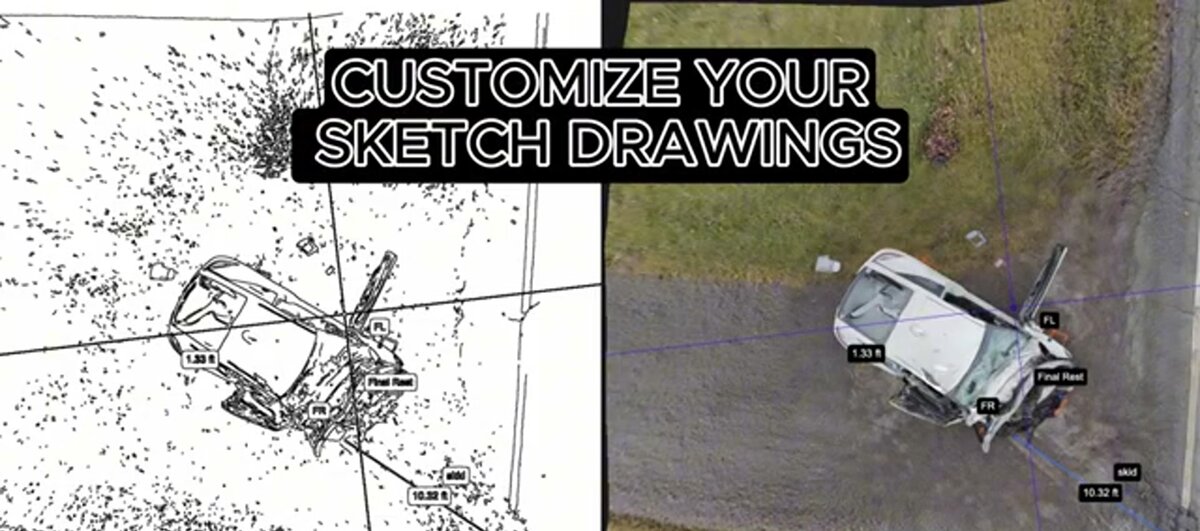
Metashape and RealityCapture are both desktop-installed tools that require a capable workstation, a real learning curve, and still-photo capture discipline. SkyeBrowse is a cloud-based videogrammetry platform that processes drone video directly, no desktop install or GPU required, when the goal is a fast, measurable 3D scene rather than a hero-quality render mesh.
Neither Metashape nor RealityCapture processes video natively. Both expect still photographs, which means drone video has to be extracted into frames or captured separately with a stills workflow, adding a step most field teams skip when they need a deliverable the same day. SkyeBrowse instead takes .MP4 or .MOV drone video, uploaded straight from the field through Universal Upload or the SkyeBrowse Flight App, and processes it in the cloud at app.skyebrowse.com rather than on a local workstation. That trade-off is worth naming honestly: SkyeBrowse is not aiming to replace a studio's high-poly VFX asset pipeline or a survey team's multispectral index workflow. It is built for teams that need a georeferenced, measurable 3D or 2D map fast, with accuracy tiers from about 2 to 6 inches on the entry Lite subscription up to about a quarter inch on Premium, or you can start free on the Freemium plan, exported as LAZ point clouds, GLB meshes, or GeoTIFF orthomosaics. For a deeper look at how the two approaches diverge, see our breakdowns of SkyeBrowse vs Agisoft Metashape and SkyeBrowse vs RealityCapture.
Which one should you choose, Metashape or RealityCapture?
Choose Metashape if your deliverables are georeferenced maps, agricultural indices, or survey-grade orthomosaics and you want to own the license outright. Choose RealityCapture if raw reconstruction speed matters more than geodetic tooling, your studio is under the $1 million revenue threshold, or you are producing game and film assets rather than measured maps.
Neither is a wrong choice on technical merit alone. The decision usually comes down to workflow fit and company size. A county GIS department running repeat aerial surveys benefits from Metashape's ground control point tools and one-time license cost. A small studio doing occasional photogrammetry scans for game assets gets more value from RealityCapture's free tier and faster GPU pipeline. Larger studios over the revenue threshold should run the annual seat cost against Metashape's one-time purchase price before committing, especially if the license only needs to run on one or two machines. For a broader look at the category, including tools beyond these two, see our guide to the best photogrammetry software.
FAQ
Can I use Metashape and RealityCapture together?
Yes. Some studios generate a dense point cloud or mesh in RealityCapture for speed, then bring it into Metashape for georeferencing, orthomosaic export, or additional processing tools RealityCapture does not offer. Both programs read and export common formats like OBJ, PLY, and LAS/LAZ, so mixed pipelines are common in survey and VFX shops.
Is RealityCapture really free?
It is free for individuals, students, educational institutions, and businesses with less than $1 million in annual revenue, under Epic Games' current licensing terms for the software (rebranded RealityScan in 2025). Companies above that revenue threshold pay $1,250 per seat per year, or $1,850 per seat per year for a bundle that includes Unreal Engine and Twinmotion.
Do I need a powerful GPU for either program?
Both benefit heavily from a modern NVIDIA GPU with at least 8GB of VRAM, and RealityCapture's dense reconstruction and mesh algorithms are more GPU-dependent than Metashape's, which leans more on CPU and RAM for its depth-map based pipeline. Large aerial or industrial datasets in either tool are far faster on a workstation with 12GB or more of VRAM and 32GB-plus of system RAM.
Upload your first video free. Create a free SkyeBrowse account, upload a drone video, and get a 3D model processed in the cloud. Freemium organizations that have never had a paid plan can get their first full Commercial model for $5 (normally $24.99), with every Commercial tool, every export, and 90-day storage.