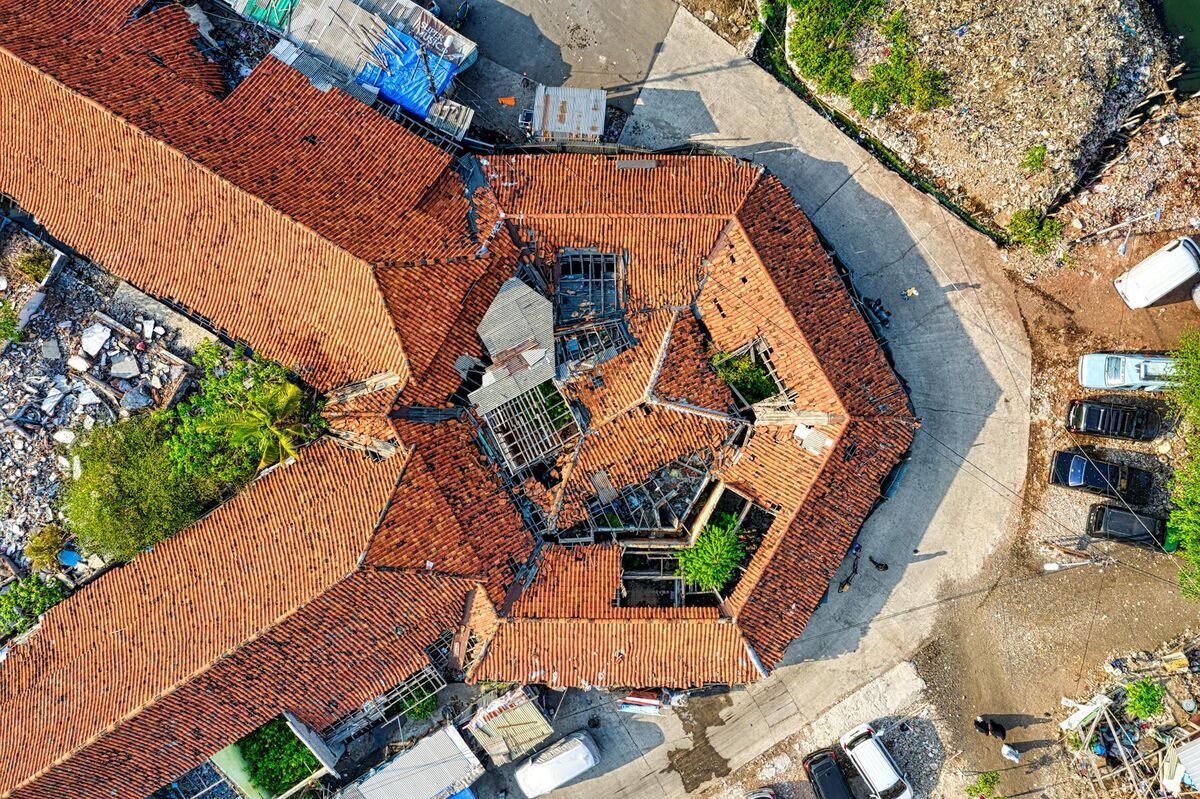
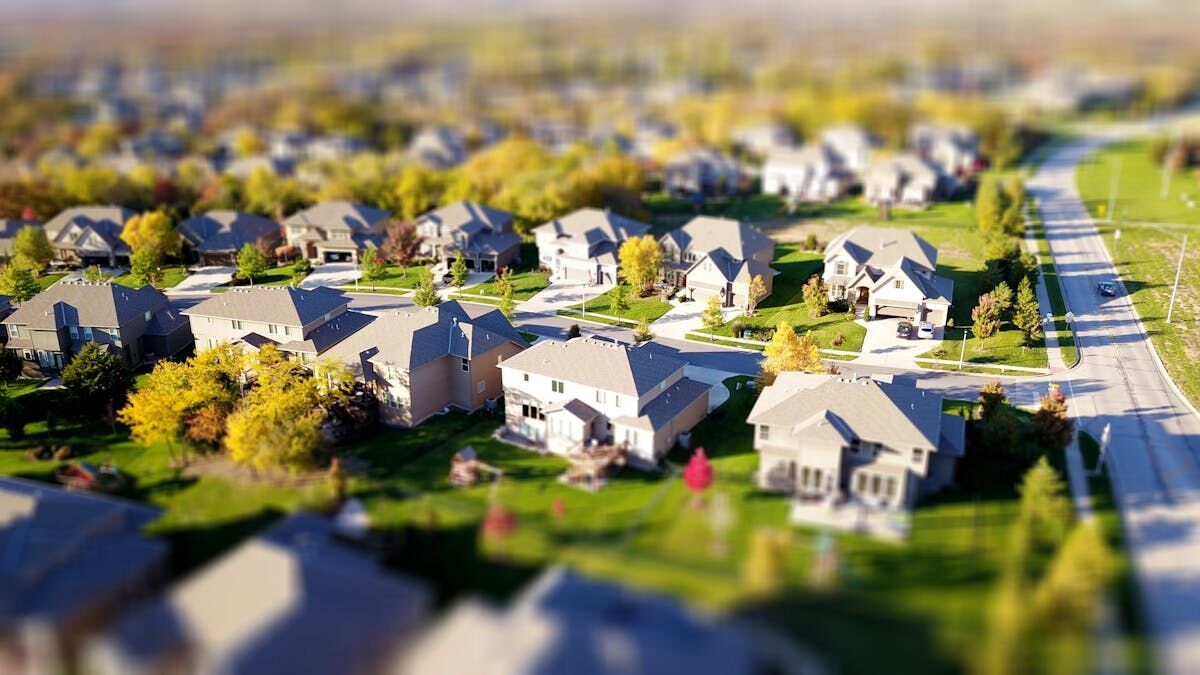
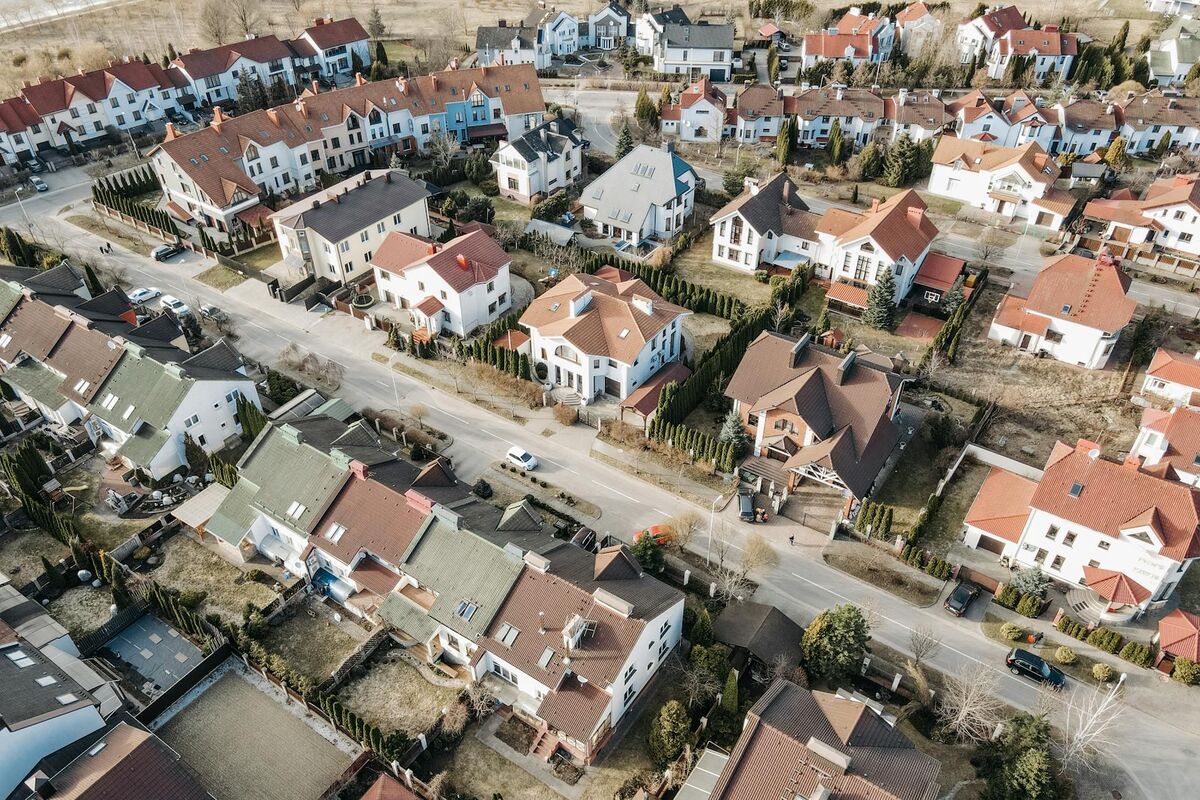
A roofing drone — any unmanned aerial vehicle (UAV) used to inspect, measure, or document a roof — is rapidly becoming standard equipment for roofing contractors and roofing companies that want faster estimates, cleaner insurance documentation, and a safer crew. By flying a 2-minute orbit around a structure and feeding that video into SkyeBrowse's cloud-based videogrammetry platform (software that converts drone video into scaled 3D models), contractors get a shareable, measurable model of the roof without ever sending a worker up a ladder for a preliminary assessment.
Key Takeaways
- Roofing is one of the most dangerous trades in construction — OSHA 29 CFR 1926 Subpart R mandates fall protection for roof work above six feet, and drone pre-assessments eliminate that exposure entirely before a job is contracted.
- Contractors capture a quick orbit, upload to SkyeBrowse, and pull square footage and pitch measurements from the 3D model while still on the truck — no climbing, no manual tape.
- SkyeBrowse's Premium Advanced tier ($199 per model credit) delivers 0.1-inch accuracy at 16K resolution — precision that means bid estimates match field reality and material waste drops.
- Workers' comp premiums for roofing crews are among the highest in construction; eliminating pre-assessment ladder exposure reduces incident frequency, directly affecting mod rates.
- No photogrammetry expertise is required — upload .MP4 or .MOV video to app.skyebrowse.com and the model is ready to share via link, with no desktop software beyond the drone itself.
Contents
- Why are roofing companies adopting drones?
- How does a roofing drone improve estimates?
- How do drones help roofing contractors win more bids?
- What does the SkyeBrowse workflow look like for a roofing contractor?
- What are the compliance and safety requirements for a roofing company drone?
- FAQ
Why are roofing companies adopting drones?
Roofing companies are adopting drones primarily to reduce fall risk and cut the time spent on preliminary site assessments. Instead of sending a crew member up a ladder to measure pitch and document damage before a bid is even accepted, a drone can orbit the structure in two minutes and capture all the visual data needed to generate an estimate remotely. The result is fewer ladder climbs, faster turnaround on quotes, and a differentiating capability that impresses property owners.
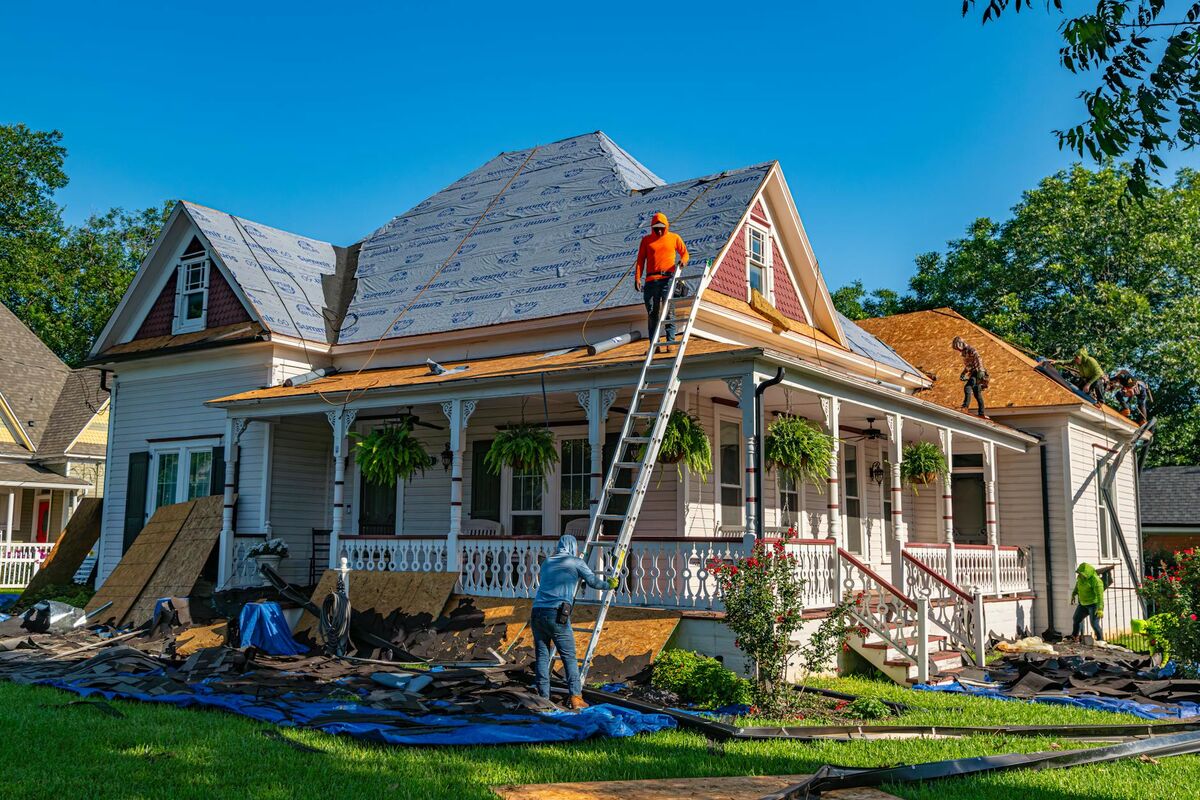
Falls from roofs are the leading cause of fatalities in the construction industry. OSHA 29 CFR 1926 Subpart R mandates fall protection for roofing work above six feet — harnesses, guardrails, or safety nets — and violations carry penalties that compound quickly under repeat-violation classifications. Replacing the preliminary measure-and-walk step with a drone fly-around eliminates that exposure before any contract is signed.
The workers' compensation impact compounds the OSHA compliance argument. Roofing crews carry some of the highest workers' comp mod rates in construction, driven by the frequency of ladder and roof-edge incidents. Removing pre-assessment roof access — the step where a worker climbs before a job is even confirmed — reduces the incident exposure that feeds those rates. Fewer incidents, lower mod, lower premium over time.
Beyond compliance, speed matters commercially. A drone for roofing can survey a residential property in under five minutes, and with cloud-based processing, the estimator can have a scaled 3D model ready before driving back to the office. The National Roofing Contractors Association (NRCA) recognizes drone technology as an emerging best practice for inspection and documentation workflows. For a broader look at how roofing fits within the wider market of drone inspection services — including bridges, utilities, and commercial structures — see our dedicated overview.
How does a roofing drone improve estimates?
A roofing drone improves estimates by replacing manual tape-measure and pitch-gauge work with a single aerial video capture that generates a scaled, measurable 3D model. Estimators can measure roof area, ridge length, valley length, and slope directly from the model — eliminating the calculation errors and omissions that come from trying to reconstruct a complex roof geometry from a series of manual measurements taken from a ladder.
Traditional residential roofing estimates require a field technician to climb the roof, walk each plane, and record measurements manually. For complex hip, gambrel, or mansard roofs with multiple penetrations, this process takes 30–60 minutes and still produces data prone to transcription error. A drone orbit of the same structure takes 2–3 minutes at a safe altitude, and SkyeBrowse's videogrammetry engine reconstructs the geometry from the video frames automatically.
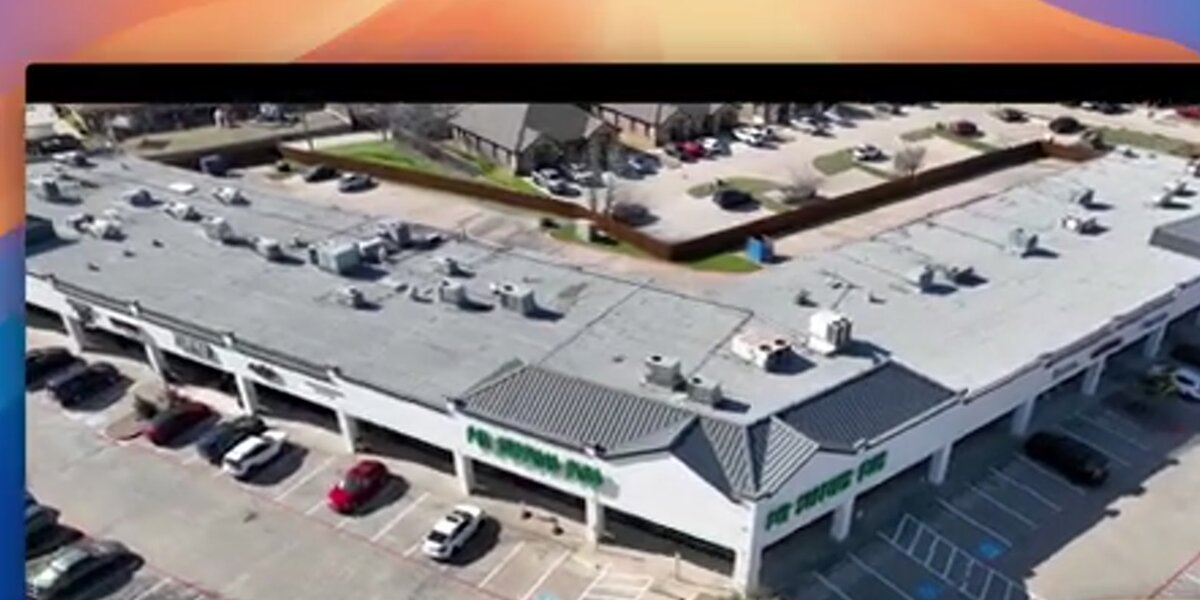
The 3D model exports include georeferenced data that supports precise takeoff calculations. A roofing contractor can pull square footage by plane, calculate material quantities, and generate a line-item estimate directly from the model — all before a single shingle is touched. For commercial roofing companies bidding on flat or low-slope structures, the drone also captures HVAC units, skylights, drains, and other penetrations that affect labor and material costs.
Learn more about the full inspection workflow in our drone roof inspection guide and how to conduct a thorough roof assessment using aerial data.
How do drones help roofing contractors win more bids?
Roofing contractors who can deliver a shareable 3D model of a prospect's roof on the same day as a site visit close bids faster than competitors relying on manual measurements and follow-up calls. The 3D model becomes a sales tool — property owners who have never used 3D software can orbit their own roof, zoom into damage areas, and see exactly what the contractor is proposing to repair.
Speed and presentation differentiate contractors in post-storm markets where homeowners are fielding calls from multiple companies simultaneously. A contractor who arrives with a drone, captures a quick orbit, and texts the property owner a link to a measurable 3D model within the hour sets a professionalism bar that manual-only competitors cannot match.
The orthomosaic export — a geometrically corrected top-down view with accurate scale — allows contractors to generate precise square footage by roof plane and produce line-item estimates that hold up when material quantities are verified on delivery. Fewer surprises at the material yard means fewer margin-eating change orders and stronger relationships with general contractors and property managers who value predictable bids.
For a deeper look at the estimating workflow, see our drone roof inspection guide and the roof assessment overview for how aerial data maps to specific estimate line items.
What does the SkyeBrowse workflow look like for a roofing contractor?
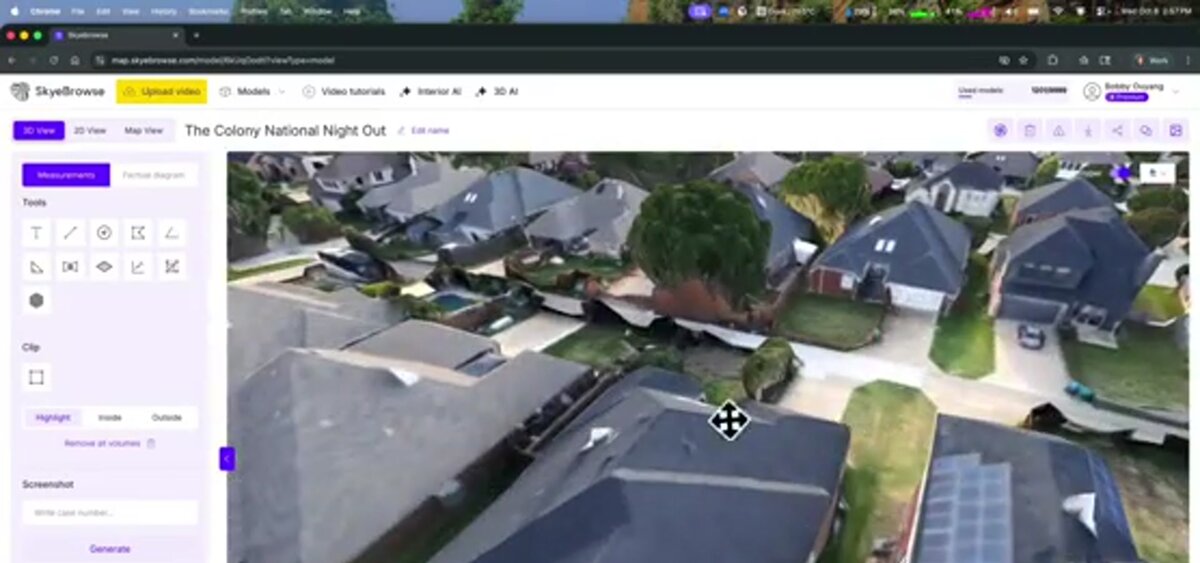
The SkyeBrowse workflow for a roofing contractor requires three steps: fly a 2-minute orbit around the structure using any supported drone, upload the .MP4 or .MOV video file to app.skyebrowse.com via the Universal Upload feature or the SkyeBrowse Flight App, and then pull square footage, pitch, and ridge measurements from the finished 3D model — all without returning to the property. No photogrammetry training, desktop software, or specialized hardware is required beyond the drone itself.
Most roofing companies can be operational with SkyeBrowse within a single afternoon. The flight app is available for iOS and Android and guides the pilot through a simple orbit pattern optimized for roof capture. Contractors capture a quick orbit, upload, and pull square footage and pitch measurements from the 3D model while still on the truck — no climbing, no manual tape. For crews using DJI drones, attaching the .SRT telemetry file alongside the video improves georeferencing accuracy automatically.
Once the video is uploaded, SkyeBrowse's cloud processing engine — hosted on AWS GovCloud — reconstructs the roof geometry. For roofing companies where bid accuracy determines profitability, Premium Advanced ($199 per model credit) is the right tier: 16K resolution at 0.1-inch accuracy means estimates match field reality and costly material overruns become rare. Premium ($99 per model credit) at 8K resolution and approximately 0.25-inch accuracy handles most residential re-roofing estimates and job documentation needs. Lite processing (2–6 inch accuracy) works for rapid initial triage before committing to full measurement.
The finished model exports as a GLB (3D mesh) or GeoTIFF (orthomosaic top-down view), and the shareable link works in any browser. Property owners who have never used 3D software can orbit the model of their own roof, zoom into damage areas, and understand exactly what the roofing contractor is proposing to repair — which shortens the sales conversation and increases close rates.
Visit skyebrowse.com/tutorials for step-by-step capture guides, or skyebrowse.com/supported-drones to confirm your drone model is supported.
What are the compliance and safety requirements for a roofing company drone?
In the United States, roofing companies using drones for paid work must comply with FAA Part 107 regulations, which require the operator to hold a Remote Pilot Certificate, maintain visual line of sight, and avoid flying over people or moving vehicles without a waiver. Most residential roofing sites fall comfortably within these rules. Additionally, local ordinances and airspace restrictions near airports must be checked before each flight using the FAA's B4UFLY or LAANC authorization tools.
Roofing contractors offering drone services need a Part 107 Remote Pilot Certificate — a one-time FAA knowledge test that qualifies any team member to fly commercially. The exam covers airspace classification, weather effects on drone flight, and emergency procedures, all manageable with two to four weeks of self-study using free FAA materials. Many roofing companies designate one employee as the certified remote pilot and train other crew members as visual observers to support compliant flights in busier environments.
From a liability standpoint, maintaining complete flight logs and storing model files with timestamps creates a documented chain of custody for every inspection. This protects the roofing contractor in disputes over pre-existing damage, scope creep, or warranty claims. Because SkyeBrowse stores models in the cloud with creation timestamps, the documentation is automatically organized and retrievable at any time. For an overview of what drone inspection services cost and how to price roofing drone services competitively, see our breakdown of drone roof inspection cost and our full drone services pricing guide.
FAQ
What drone is best for roofing contractors?
Any drone that records stable video and is paired with reliable processing software works for roofing. The DJI Mini 4 Pro, DJI Mavic 3, and DJI Air 3 are popular choices because of their obstacle avoidance and high-resolution sensors. The more important factor is the software: SkyeBrowse accepts .MP4 or .MOV video from virtually any consumer or professional drone and generates a measurable 3D model without specialized photogrammetry knowledge. Check the full list at skyebrowse.com/supported-drones.
Do roofing contractors need a drone license?
In the United States, commercial drone operators — including roofing contractors using a drone for roofing work on paid jobs — must hold a FAA Part 107 Remote Pilot Certificate. The test covers airspace rules, weather, and emergency procedures and can be completed in a few weeks of self-study. Many roofing companies either train an in-house pilot or subcontract flights to a licensed drone operator.
How accurate is a drone roof measurement?
For contractor estimating, accuracy is the metric that matters most — a measurement error that understates square footage by 5% becomes a direct margin loss. SkyeBrowse's Premium Advanced tier ($199 per model credit) delivers 16K resolution at 0.1-inch accuracy, meaning bid estimates match what crews measure in the field. Premium ($99) at 8K and approximately 0.25-inch accuracy handles most residential re-roofing takeoffs. Lite tier (2–6 inch accuracy) works for initial triage when you need a quick read on scope before committing to a full bid model. See skyebrowse.com/pricing-premium for tier details.