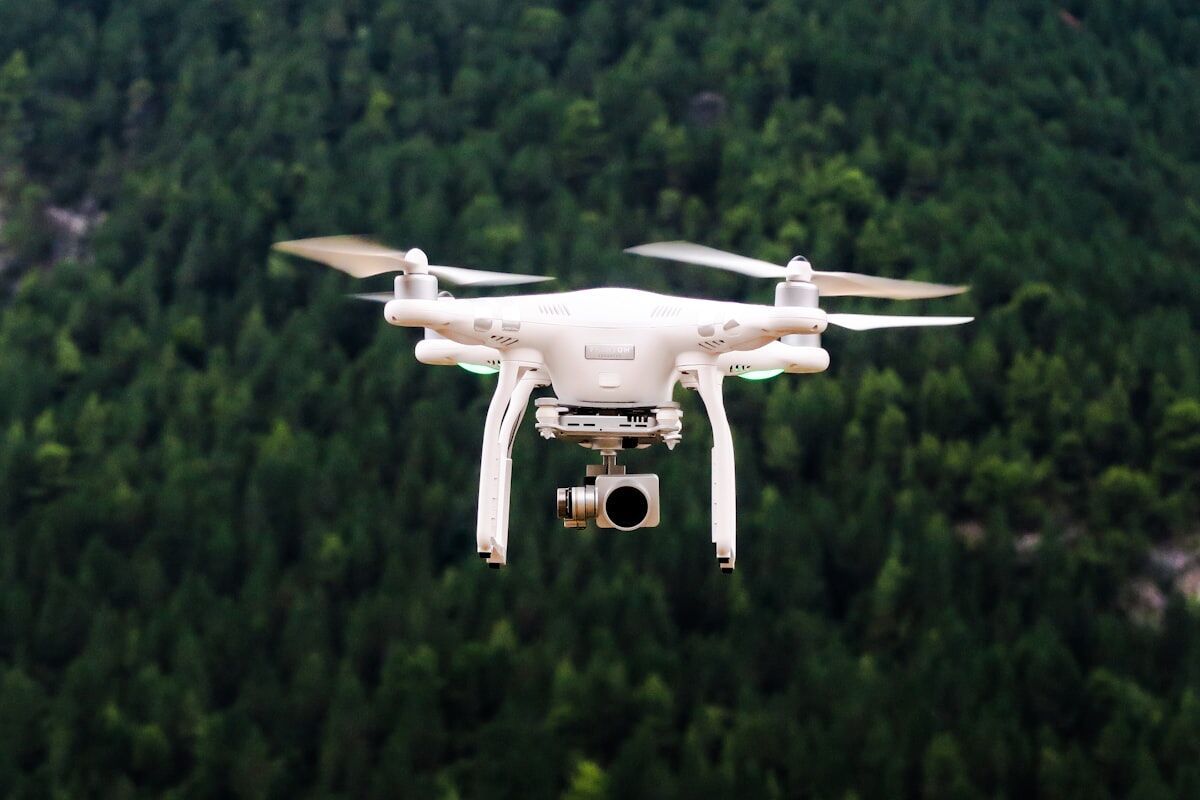
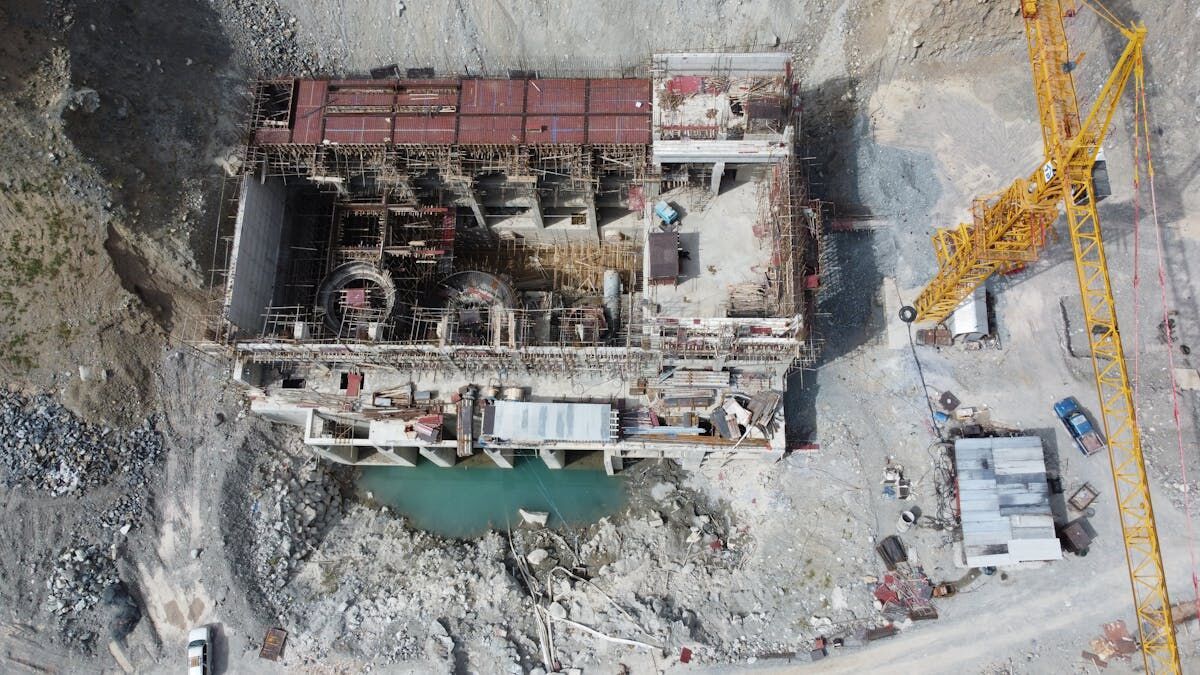
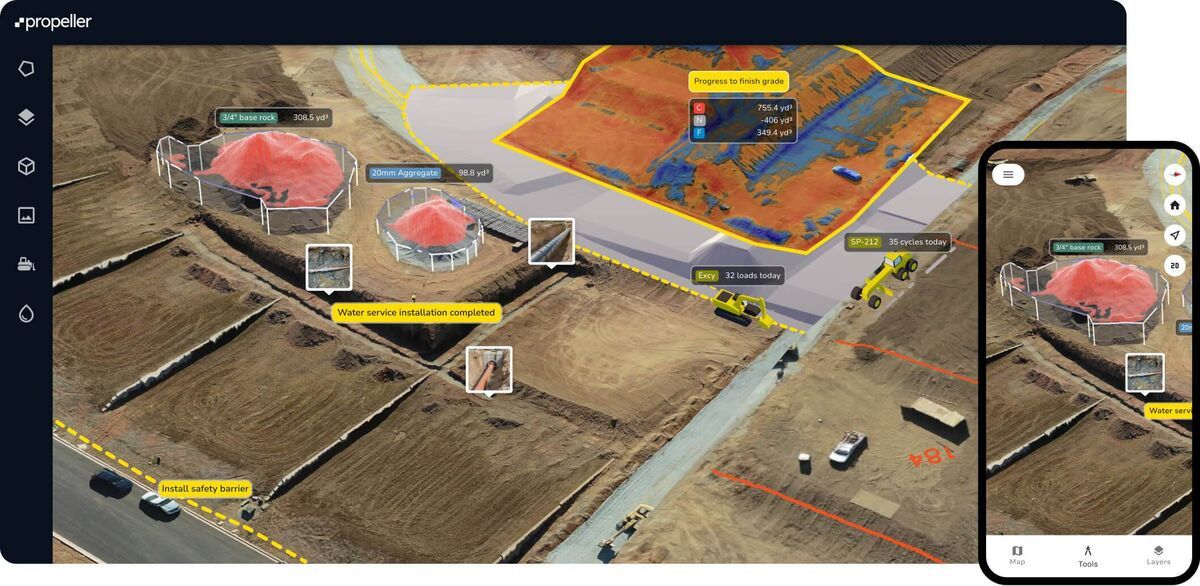
Ground control points (GCPs) are physical markers placed on the ground before a drone flight, surveyed to known coordinates, and identified in the processed imagery to anchor the model to precise real-world positions. Flying without GCPs means the model relies entirely on the drone's onboard GPS for georeferencing — faster to deploy, but potentially less accurate in absolute positioning.
For drone mapping and drone surveying and mapping teams, the tradeoff is time versus precision. GCPs add 30 minutes to several hours of field setup depending on site size, but they can improve absolute accuracy from meter-level GPS down to centimeter-level. The question is whether your project needs that level of absolute positioning or whether GPS-derived coordinates are sufficient.

Key Takeaways
- GCPs improve absolute positional accuracy from 1-3 meters (standard GPS) down to 1-3 centimeters, but relative accuracy within the model depends on image quality — not GCPs.
- For time-critical applications like crash reconstruction or disaster response, skipping GCPs is usually acceptable because speed outweighs the positional offset when relative measurements are what matter.
- GCPs are worth the setup investment on large sites (500+ acres) where GPS drift compounds, and on projects requiring absolute coordinate alignment with engineering plans, property surveys, or utility maps.
- RTK-equipped drones reduce absolute error to 2-5 centimeters without physical markers, largely replacing full GCP networks — though professional surveyors still use a few checkpoints for auditable deliverables.
- SkyeBrowse applies RTK telemetry embedded in drone subtitle files during processing, achieving survey-grade georeferencing without placing ground control points, while still exporting LAZ point clouds for further alignment.
Contents
- What Do GCPs Actually Do for Drone Mapping Accuracy?
- How Accurate Is GPS-Only Drone Mapping Without GCPs?
- When Are GCPs Worth the Extra Field Time?
- What Are the Risks of Skipping GCPs?
- Does RTK Eliminate the Need for Ground Control?
- GCP vs No GCP Comparison
- Where Does SkyeBrowse Fit?
- Related Comparisons
- Get a SkyeBrowse Recommendation
What Do GCPs Actually Do for Drone Mapping Accuracy?
GCPs correct systematic errors in drone GPS positioning. Consumer and enterprise drone receivers carry 1-3 meter horizontal error and 2-5 meter vertical error. GCPs provide known coordinates that the processing software uses to warp the model until those marked points align, pulling the surrounding geometry into tighter absolute accuracy — often below 2 centimeters horizontally.
The improvement applies specifically to absolute accuracy. Relative accuracy — how precisely you measure distances between objects within the model — depends on image resolution, overlap, and processing quality rather than GCPs. Many drone photogrammetry use cases care more about relative measurements than absolute map coordinates.
How Accurate Is GPS-Only Drone Mapping Without GCPs?
Without GCPs, absolute positional accuracy depends entirely on the drone's GPS receiver. Standard drones produce models with 1-3 meter absolute error. RTK-equipped drones reduce that to 2-5 centimeters without any ground markers. In both cases, relative accuracy within the model remains strong because relative geometry depends on image quality, not GPS precision.
For crash scene documentation, building inspection, or construction progress monitoring, relative accuracy is usually the critical metric. Whether a crash scene model is 2 meters offset on a map matters less than whether the distance between two vehicles is measured to within half an inch.
When Are GCPs Worth the Extra Field Time?
GCPs are worth the investment when absolute accuracy is a project requirement. Topographic surveys feeding into engineering design need the model to match real-world coordinates within centimeters. Volumetric calculations for earthwork or stockpile measurement require accurate elevation data that GCPs help constrain.
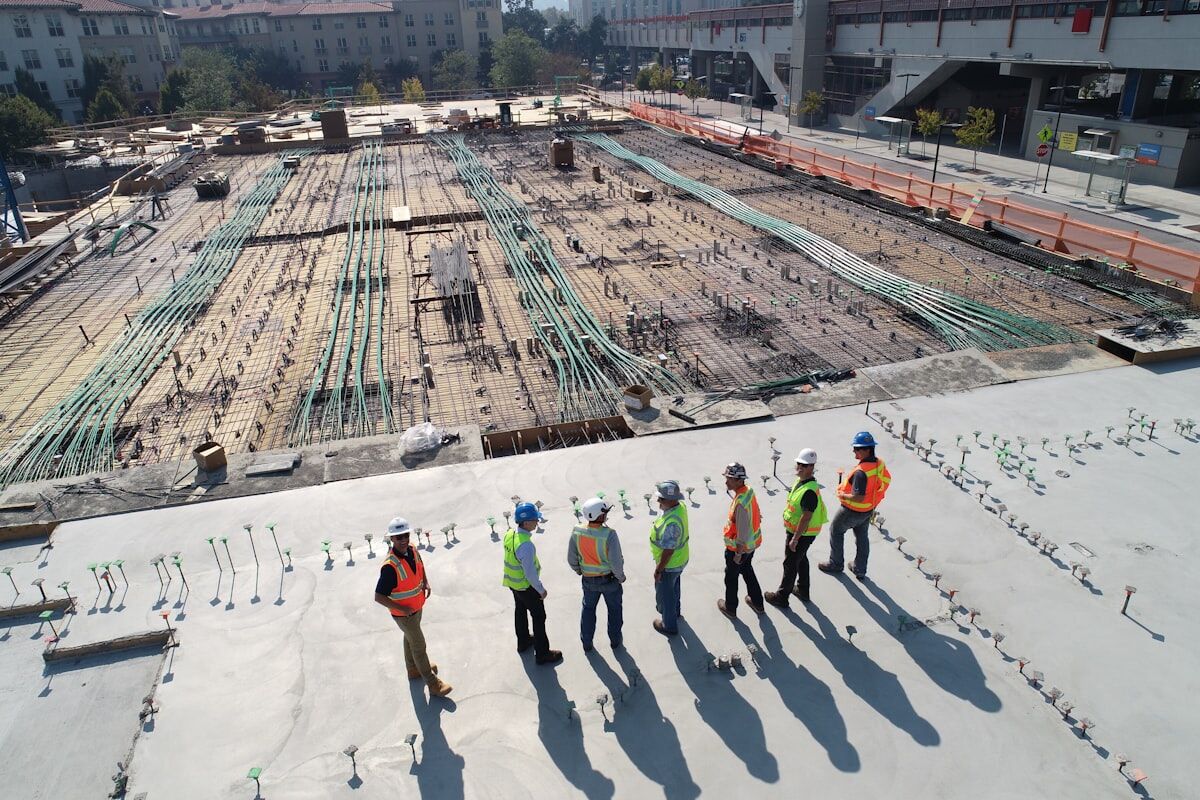
GCPs also add value on large sites where GPS drift compounds over distance. A 500-acre construction site mapped without GCPs may show noticeable warping at the edges. Distributing GCPs across the site keeps measurements consistent end to end. For small sites under a few acres, GCP benefits are typically marginal relative to setup cost.
What Are the Risks of Skipping GCPs?
The primary risk is absolute positional shift. If your model needs to overlay on a property boundary survey, utility map, or CAD site plan, a 2-meter GPS offset creates alignment problems. Stacking multiple flights over time without GCPs can produce models that do not align with each other, making temporal comparisons unreliable.
The secondary risk is vertical inaccuracy. GPS altitude readings are less precise than horizontal positions, which propagates into elevation models and contour maps. For grading projects, slope analysis, or drainage design, vertical error without GCPs may exceed acceptable tolerances. For time-critical documentation like crash scenes or disaster response, skipping GCPs is usually acceptable because speed outweighs the positional offset.
Does RTK Eliminate the Need for Ground Control?
RTK drones improve GPS accuracy enough to replace GCPs in many use cases but not all. An RTK-equipped drone receives real-time corrections from a base station or network, achieving 2-5 centimeter absolute accuracy in-flight. For most drone surveying and mapping projects, this eliminates the need to place physical markers.
However, GCPs still serve as independent quality checks even on RTK flights. Placing a few checkpoints and comparing their surveyed coordinates against the model is standard practice for auditable deliverables. RTK reduces the GCP count from a full network to a handful of verification points, but professional surveyors rarely eliminate them entirely on high-stakes projects.
GCP vs No GCP Comparison
| With GCPs | Without GCPs | |
|---|---|---|
| Absolute horizontal accuracy | 1-3 cm (with proper distribution) | 1-3 m (standard GPS) or 2-5 cm (RTK) |
| Absolute vertical accuracy | 2-5 cm | 3-10 m (standard GPS) or 3-5 cm (RTK) |
| Relative accuracy | Same as without — driven by image quality | Same as with — driven by image quality |
| Field setup time | 30 min to several hours depending on site | Minimal — fly and capture |
| Equipment needed | Markers, RTK rover or total station, survey-grade GPS | Drone only |
| Best for | Engineering surveys, volumetrics, regulatory compliance | Rapid documentation, inspections, time-critical scenes |
| Multi-flight alignment | Strong consistency across sessions | May drift between sessions without RTK |
Where Does SkyeBrowse Fit?
SkyeBrowse is built for rapid drone mapping where speed to a usable model matters most. The platform processes drone video without requiring GCPs, relying on GPS telemetry from DJI .SRT and Autel .ASS subtitle files for georeferencing. This makes SkyeBrowse a strong fit for time-critical applications like crash reconstruction where relative accuracy is the priority. Accuracy scales with tier: Lite delivers 2-6 inch accuracy, Premium reaches 0.25 inch at 8K, and Premium Advanced achieves 0.1 inch at 16K.
SkyeBrowse also supports RTK-enabled drones, and using RTK significantly improves absolute accuracy. When RTK telemetry is embedded in the drone's subtitle files, SkyeBrowse applies those corrected coordinates during processing, bringing absolute positioning from meter-level GPS down to centimeter-level without placing a single ground control point. For teams flying RTK-equipped DJI or Autel platforms, this means survey-grade georeferencing with the same fast videogrammetry workflow. Models still export as LAZ point clouds for further alignment in survey software when needed.
Try SkyeBrowse Free
If you need rapid drone mapping with strong relative accuracy and want to understand whether GCPs are necessary for your use case, SkyeBrowse can help you evaluate the right workflow.
Upload your first video free. Create a free SkyeBrowse account, upload a drone video, and get a 3D model processed in the cloud. Freemium organizations that have never had a paid plan can get their first full Commercial model for $5 (normally $24.99), with every Commercial tool, every export, and 90-day storage.