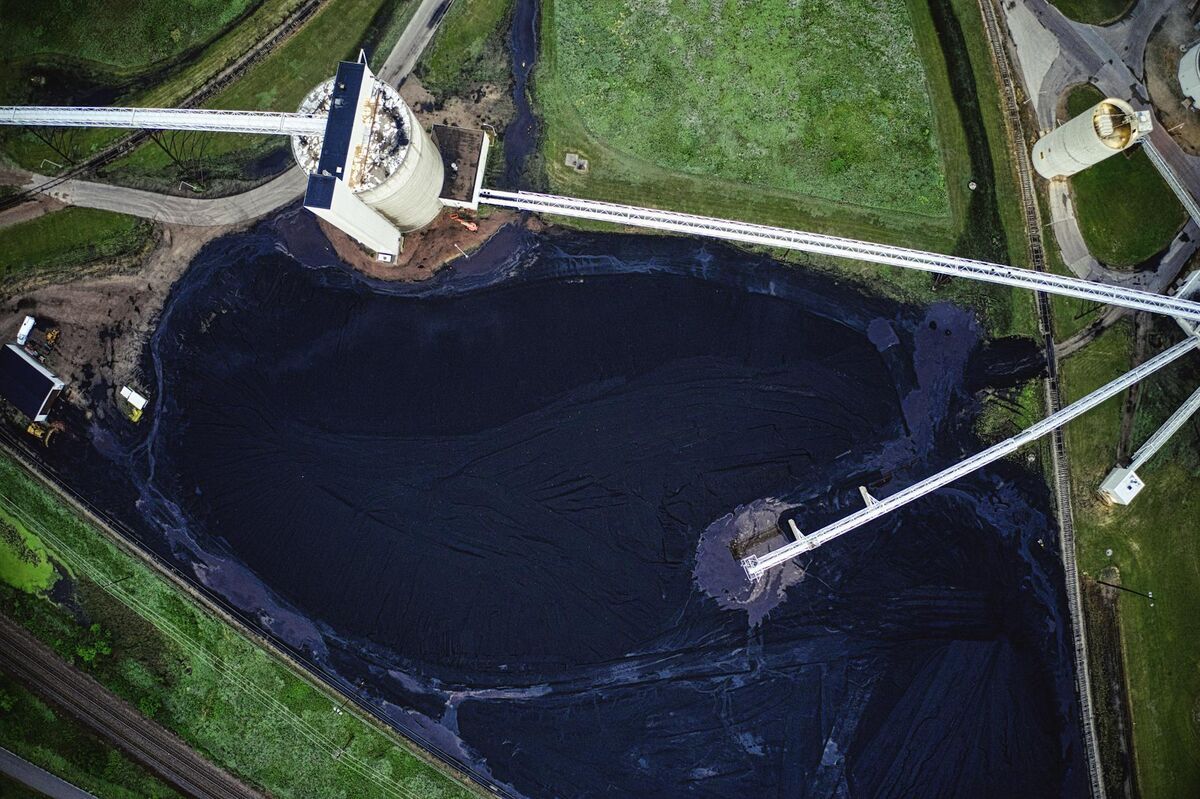
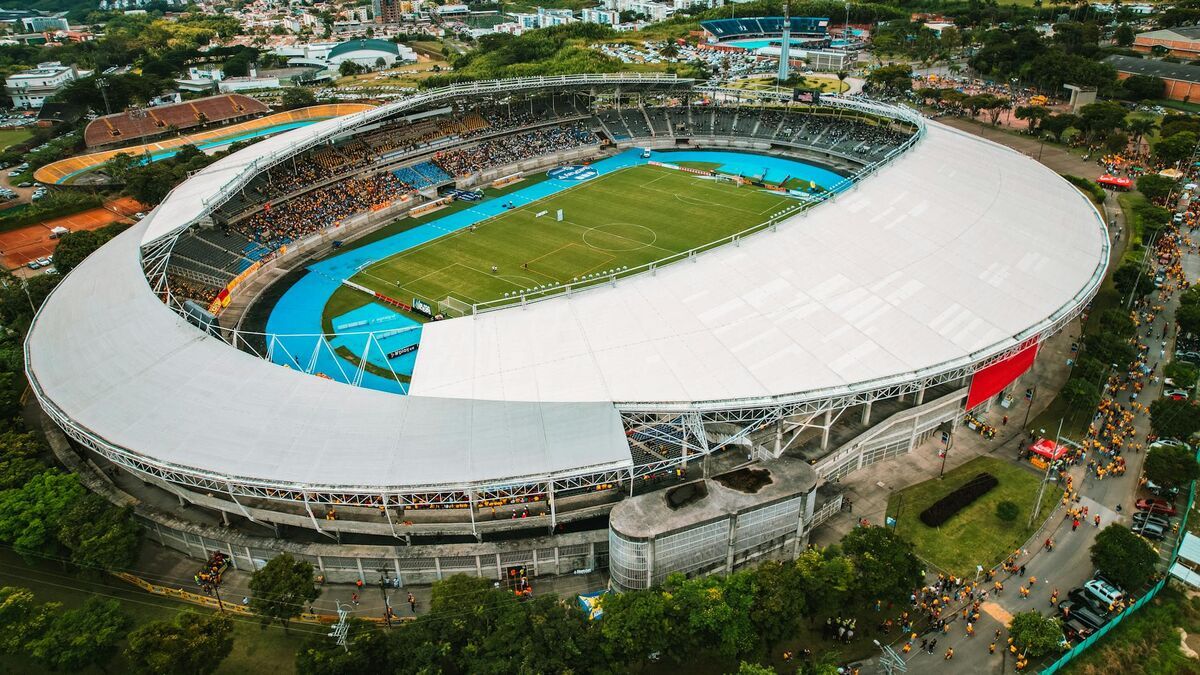
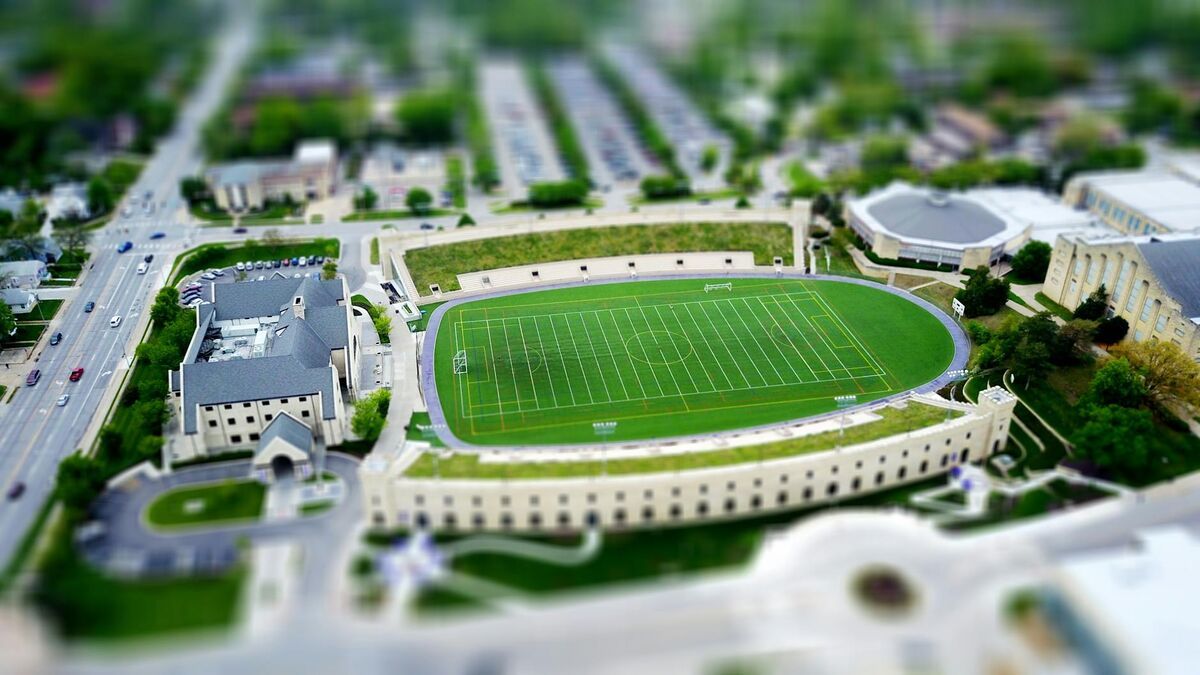
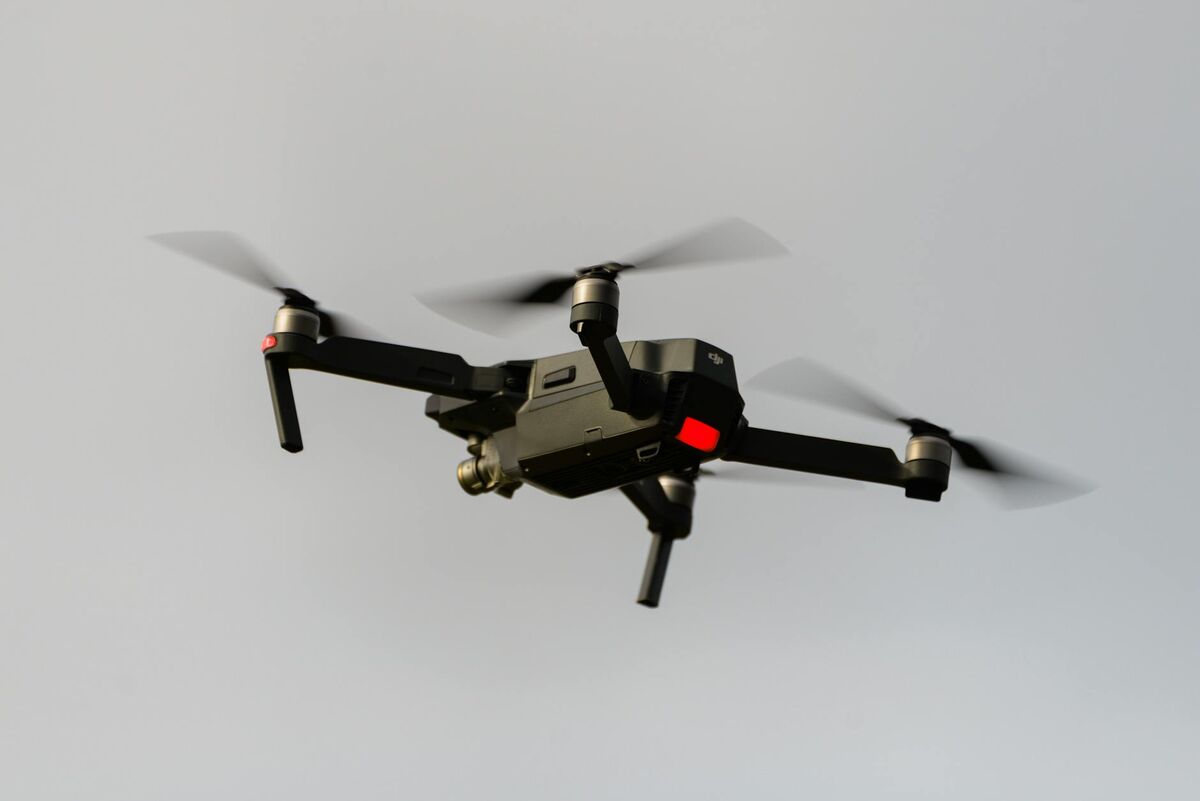
A mapper drone is a UAV specifically configured, through hardware selection, flight planning, and software workflow, to capture the overlapping aerial imagery needed to produce accurate 3D models, orthomosaics, and point clouds through photogrammetry (the science of extracting measurements from photographs). Whether you are a land surveyor, construction project manager, public safety professional, or insurance adjuster, choosing the right aerial mapping drone and processing platform determines how quickly and accurately you can turn a flight into actionable spatial data. Surveyors weighing RTK hardware first should also read our guide to the best drones for aerial survey. This guide covers what separates a capable mapper drone from a basic consumer quadcopter, reviews four leading models, and explains how software like SkyeBrowse makes professional-grade drone 3D mapping accessible from virtually any drone you already own.
Key Takeaways
- Any drone with a stable gimbal camera can capture mapping footage, but RTK GPS and high-resolution sensors dramatically improve measurement accuracy.
- Flight time, camera resolution, and RTK support are the three hardware factors that most directly determine mapping productivity and output quality.
- The DJI Mavic 3 Enterprise, DJI Matrice 350 RTK, Autel EVO II Pro, and senseFly eBee X cover four distinct use-case tiers, from rapid deployment to large-area survey-grade work.
- SkyeBrowse's videogrammetry platform accepts standard MP4 or MOV video from any drone, eliminating the need to change hardware to access cloud-based 3D mapping.
- All commercial drone mapping operations in the United States require FAA Part 107 certification; operators must stay current with airspace authorization requirements.
Contents
- What makes a drone good for mapping?
- Which drone models perform best for 3D mapping?
- How does mapping software turn drone footage into 3D models?
- Do you need an expensive drone to get accurate results?
- What are the regulations for commercial drone mapping?
- FAQ
What makes a drone good for mapping?
A capable mapper drone needs three core hardware traits: a high-resolution stabilized camera for sharp overlapping frames, precise GPS (ideally RTK or PPK) for accurate georeferencing, and enough flight time to cover the target area without interruption. Secondary factors include wind resistance, obstacle avoidance, and payload capacity for swappable sensor packages.
Camera quality is where mapping productivity starts. For drone 3D mapping, image sharpness directly affects the spatial resolution of the final model. A 20 MP sensor capturing frames at consistent intervals produces tighter point clouds than a lower-resolution camera flying the same pattern. Mechanical shutters reduce motion blur at higher speeds, which matters when flying grid patterns at 10-15 m/s. Look for cameras with at least a 1-inch sensor and the ability to lock aperture and ISO for consistent exposure across a full mission.
GPS accuracy determines how well the model anchors to the real world. Standard consumer GPS drifts by 1 to 3 meters, which is acceptable for visual inspections but isn't enough for certified survey deliverables. Real-Time Kinematic (RTK) GPS corrects position data against a fixed base station in real time, pushing horizontal accuracy down to 1-3 centimeters without ground control points. Post-Processing Kinematic (PPK) achieves similar results by correcting raw GPS logs after the flight, which is useful in environments where live corrections are unreliable.
Flight time sets the practical coverage limit. Most professional mapping quadcopters deliver 35-55 minutes per battery in calm conditions. At a typical mapping altitude of 100 meters and a 75% front/70% side overlap, a 45-minute flight covers roughly 100-200 acres depending on wind and terrain. Fixed-wing platforms like the senseFly eBee X extend that to 500+ acres per flight by trading vertical agility for aerodynamic efficiency.
Which drone models perform best for 3D mapping?
The DJI Mavic 3 Enterprise leads the portable quadcopter tier with its 45-minute flight time and 20 MP camera with mechanical shutter. The DJI Matrice 350 RTK sets the standard for enterprise survey accuracy with an integrated RTK module and hot-swap batteries. The Autel EVO II Pro offers a strong 6K sensor at a lower price point, and the senseFly eBee X is the top fixed-wing choice for large-area agricultural and topographic surveys.
Here is a side-by-side comparison of the four most widely used mapper drone platforms in 2026:
| Model | Camera | Flight Time | RTK Support | Price Range | Best For |
|---|---|---|---|---|---|
| DJI Mavic 3 Enterprise | 20 MP, 4/3 CMOS, mech. shutter | 45 min | Optional (Mavic 3E) | $5,000-$10,000 | Rapid deployment, public safety, inspection |
| DJI Matrice 350 RTK | Up to 45 MP (P1 payload) | 55 min | Built-in RTK module | $15,000-$30,000+ | Survey-grade mapping, infrastructure |
| Autel EVO II Pro | 20 MP, 1-inch CMOS | 42 min | No (GPS only) | $3,500-$5,500 | Budget enterprise, law enforcement |
| senseFly eBee X | 24 MP Sony RX1R II | 90 min | PPK standard | $25,000+ | Large-area agriculture, topographic survey |
The DJI Mavic 3E mapping platform is a particularly popular starting point for public safety agencies and construction teams that need a deployable, compact quadcopter capable of generating sub-10-centimeter models for site documentation. For maximum positional accuracy on infrastructure and survey projects, the DJI Matrice 350 RTK with its integrated RTK module and swappable payload system gives operators a dedicated survey-grade platform that can carry thermal, LiDAR, or multispectral sensors in addition to the standard visual camera.
The Autel EVO II Pro ships with a .ASS telemetry subtitle file that mapping platforms like SkyeBrowse use directly for improved video georeferencing, a useful feature for teams that want accurate positioning without RTK hardware. DJI drones produce equivalent .SRT telemetry files that carry GPS coordinates, altitude, and gimbal angle frame by frame.

How does mapping software turn drone footage into 3D models?
Mapping software, whether photogrammetry-based (still images) or videogrammetry-based (video), identifies matching features across hundreds of overlapping frames, triangulates their 3D positions, and constructs a dense point cloud that is then meshed into a 3D model or flattened into an orthomosaic. The key differentiator between platforms is how much compute time and manual intervention that pipeline requires.
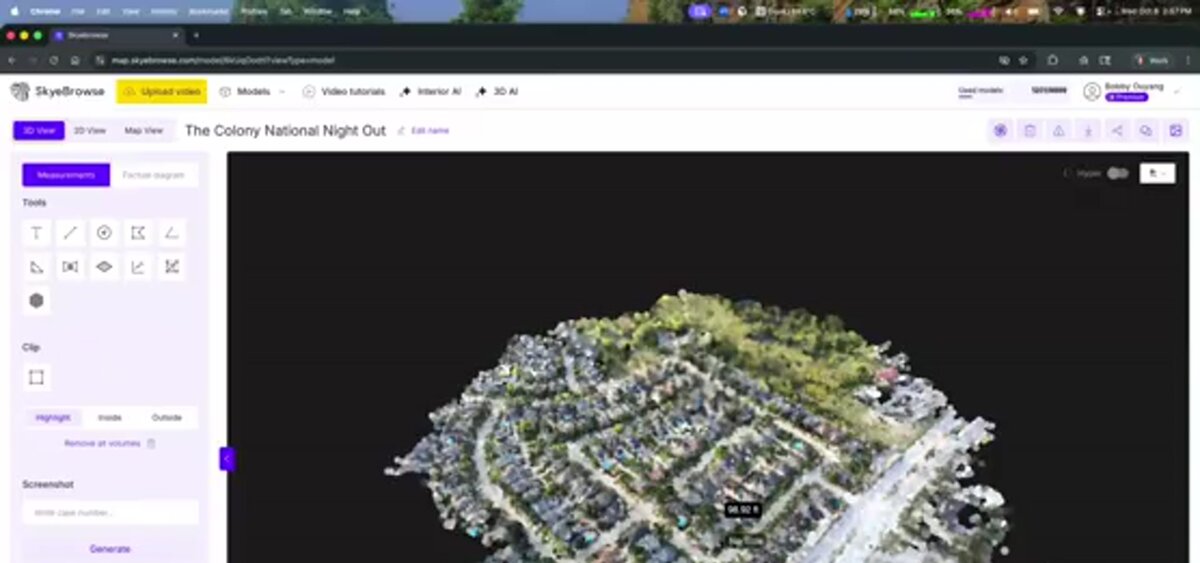
Traditional photogrammetry platforms require you to capture hundreds of individual photos in a structured grid pattern, import them into desktop software, and run a multi-hour processing job. Videogrammetry-based drone mapping software like SkyeBrowse simplifies that workflow: you fly a standard orbit or grid pattern with your drone's native video mode running, upload the MP4 or MOV file at app.skyebrowse.com, and receive a georeferenced 3D model in the cloud, with no dedicated desktop workstation required.
SkyeBrowse's cloud processing accepts telemetry files alongside the video: .SRT files from DJI drones and .ASS files from Autel drones carry per-frame GPS, altitude, and gimbal data that the platform uses to anchor the model to real-world coordinates. The result is delivered as a shareable web viewer plus export options including LAZ point cloud, GLB 3D mesh, and GeoTIFF orthomosaic.
Accuracy scales with the processing tier selected and with how close the camera gets to the subject. The free Freemium tier processes at basic resolution for visual review, incident documentation, and construction progress checks. Commercial and Pro models process at 8K with 0.5 inch accuracy for measurement work, and the Public Safety & Enterprise plan, which adds AI moving object removal and full CJIS compliance, processes at 16K with 0.1 inch accuracy, survey-grade output without a laser sensor or ground control points. Read the broader guide to drone 3D mapping for a deeper look at how flight parameters affect final output quality.
Do you need an expensive drone to get accurate results?
No. Mapping software quality often has a larger impact on output accuracy than drone hardware. A mid-range consumer drone flying a well-planned orbit pattern and processed through a capable cloud platform will consistently outperform an expensive drone paired with poor flight technique or basic software. RTK GPS matters most for survey-grade deliverables; for documentation and general measurement tasks, most drones in current production are capable.
The practical takeaway for most buyers: start with the drone that fits your budget and physical workflow constraints, then invest in quality mapping software. A DJI Mini 4 Pro, for example, shoots 4K video and records a GPS telemetry subtitle file (.SRT) alongside it, which is more than enough for site documentation models when you upload both to a platform that reads that telemetry. It's the same file that georeferences the model automatically. Upgrade to RTK hardware once your deliverables demand survey-grade horizontal accuracy below 5 centimeters.
One area where hardware genuinely cannot be substituted is coverage speed. If you regularly map sites larger than 200 acres, a consumer quadcopter's 30-minute effective flight window becomes a serious bottleneck. In those cases, fixed-wing platforms or heavy-lift quadcopters with larger battery capacity reduce the number of battery swaps and relaunches per project. For most urban and suburban mapping tasks (inspections, incident documentation, construction progress), a mid-range enterprise quadcopter hits the right balance of portability and capability.
For a detailed breakdown of software options across drone types, see the drone mapping software guide.
What are the regulations for commercial drone mapping?
All commercial drone operations in the United States, including mapping and surveying flights, require the pilot to hold an FAA Part 107 Remote Pilot Certificate. Operations in controlled airspace require prior authorization, typically obtained through the FAA's Low Altitude Authorization and Notification Capability (LAANC) system. Flying beyond visual line of sight (BVLOS), over people, or at night requires a separate Part 107 waiver.
The FAA Part 107 framework governs all commercial small UAS operations under 55 pounds. To obtain a Remote Pilot Certificate, applicants must pass the FAA Aeronautical Knowledge Test (AKT) at an approved testing center. Once certified, pilots must register each drone used for commercial purposes and comply with airspace restrictions published via the FAA's LAANC authorization network.
Key operational rules relevant to mapping missions:
- Maximum altitude: 400 feet AGL (or 400 feet above a structure within 400 feet of the pilot)
- Maximum groundspeed: 100 mph
- Minimum visibility: 3 statute miles from the control station
- Flights at or near airports require LAANC authorization or a manual FAA waiver
- No operations over moving vehicles or people without a specific waiver
Beyond federal requirements, many state and local jurisdictions impose additional restrictions on drone flights over critical infrastructure, schools, and populated events. Surveyors should also be aware that photogrammetric deliverables used for legal land description may need to comply with state licensing requirements for Professional Land Surveyors (PLS); mapping the land from the air does not automatically authorize the use of output for legally binding boundary determinations.
FAQ
What is a mapper drone?
A mapper drone is a UAV configured for photogrammetry or videogrammetry, capturing overlapping images or video that mapping software stitches into georeferenced 3D models, orthomosaics, and point clouds. Most modern drones with a stable gimbal camera qualify, though enterprise models with RTK GPS deliver higher positional accuracy for survey-grade work.
Do I need a special drone for 3D mapping?
No. Platforms like SkyeBrowse accept standard MP4 or MOV video from virtually any drone and generate georeferenced 3D models in the cloud without specialized hardware. The quality of your video, flight pattern consistency, and software choice matter more than brand or price tier for most mapping tasks.
What is the best drone for 3D mapping in 2026?
The DJI Mavic 3 Enterprise is the top portable quadcopter for teams needing fast deployment and 45-minute flights. For survey-grade accuracy, the DJI Matrice 350 RTK with its integrated RTK module is the benchmark platform. Budget-focused operators often choose the Autel EVO II Pro, while large-area agricultural and topographic surveys favor the senseFly eBee X fixed-wing for its 90-minute endurance and PPK accuracy.
Can a consumer drone be used for mapping?
Yes. Consumer drones like the DJI Mini 4 Pro or Air 3 can capture mapping-quality footage when flown with adequate overlap and consistent speed. The main limitations are GPS accuracy (no RTK), shorter flight times, and camera resolution compared to enterprise models. For site documentation and visual modeling, consumer drones produce useful results; for measurement-critical deliverables, RTK hardware or ground control points are recommended.
How does SkyeBrowse work with different drones?
SkyeBrowse accepts MP4 or MOV video from any drone via its Universal Upload feature at app.skyebrowse.com. When you include the drone's telemetry file (.SRT for DJI, .ASS for Autel), the platform uses per-frame GPS data to georeference the model automatically. No desktop software or specialized hardware is required. Flight App automation covers specific DJI and Autel models and controllers, so don't assume automated capture for a given drone; the full compatibility list is at skyebrowse.com/supported-drones.