 Urban planning is entering a new era—one defined by speed, precision, and real-time data. As cities grow more complex and change faster than ever before, traditional tools like static maps and infrequently updated surveys are no longer enough. Drone-based 3D mapping, combined with modern platforms like SkyeBrowse, is reshaping how planners analyze space, assess development impacts, and make informed decisions grounded in the current reality of the city.
If you’re wondering whether this technology is truly practical, cost-effective, and secure for use in a city government environment, you’re in the right place. Read on to discover how urban planners can benefit from faster workflows, stronger data security, and scalable implementation—while building smarter, more resilient cities for the future.
Contents:
- How 3D drones are transforming the way urban planners work—from plans to the real city
- Accuracy and timeliness of 3D data—why traditional maps are no longer enough
- How does SkyeBrowse work in practice?
- Integration with GIS, BIM, and City Digital Twins—Drone-Based 3D as the foundation of a Digital Twin
- Costs, data security, and implementation in city government—is it worth it for urban planners?
How 3D drones are transforming the way urban planners work—from plans to the real city
In the traditional urban planning workflow, working with static maps—paper-based or digital—has long been the standard. Professionals often rely on tools such as:
- orthophoto maps,
- spatial development plans,
- GIS data,
- field survey reports,
- Geodetic documentation.
These materials are often scattered across different systems, require manual verification of multiple layers (buildings, streets, infrastructure, green areas), and are updated infrequently—sometimes only every few years. As a result, an urban planner must:
- Reconstruct existing conditions,
- plan changes,
- Analyze potential conflicts between urban functions (e.g., residential vs. commercial),
- Consult plans against on-site inventories.
In this model, there is no immediate, realistic view of a living, evolving city. The planner works with snapshots—images that serve only as fixed points in time.
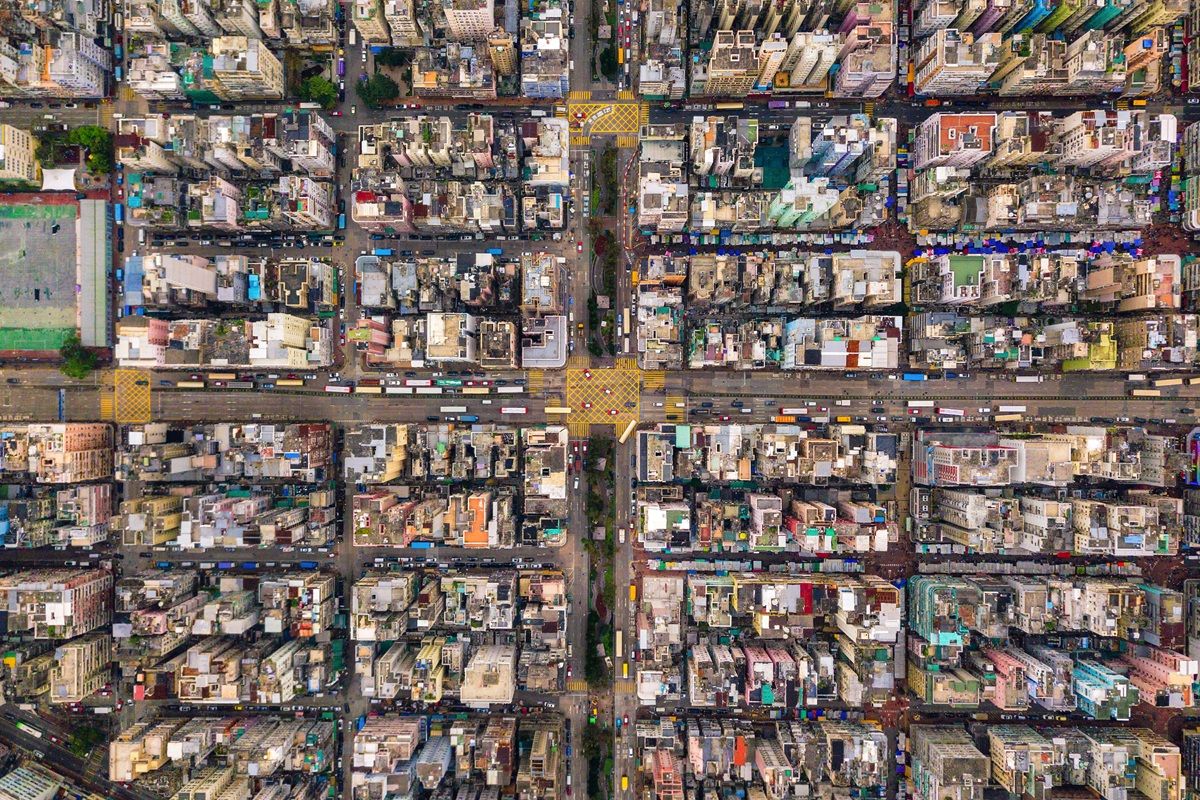 The use of 3D drones for mapping in urban planning changes the rules of the game. They make it possible to obtain up-to-date, high-resolution data on buildings, infrastructure, and green spaces from a true 3D perspective.
A drone allows planners to explore the city without leaving the office. A flight over a selected area is captured as overlapping photos or video, which are then processed into a 3D model. This model enables in-depth analysis of complex urban environments—such as building heights, site accessibility, development density, shading, street-to-building relationships, or the potential of green areas—far more easily than with traditional 2D plans. As a result, the role of 3D visualization in urban planning continues to grow. Cities can be analyzed from multiple perspectives, making it possible to simulate future scenarios, better support sustainable development, and design more people-friendly public spaces.
You might be wondering why you would need a drone if you already have orthophoto maps and GIS data. A drone-based 3D model provides timeliness, perspective, and flexibility that traditional tools simply cannot match to the same extent. That is why SkyeBrowse 3D drone mapping software has become a powerful solution for urban planners—one that truly supports next-generation urban planning.
Advantages of using drones for urban planning and 3D mapping
Drones enable rapid data collection across large areas, significantly reducing the need for time-consuming ground surveys. Instead of spending two or three days conducting field measurements, you can perform a single drone flight and obtain comprehensive data within about an hour. This makes it much easier and faster to identify issues such as illegal construction, neglected areas (“urban blight”), land-use conflicts, or sites with strong development potential.
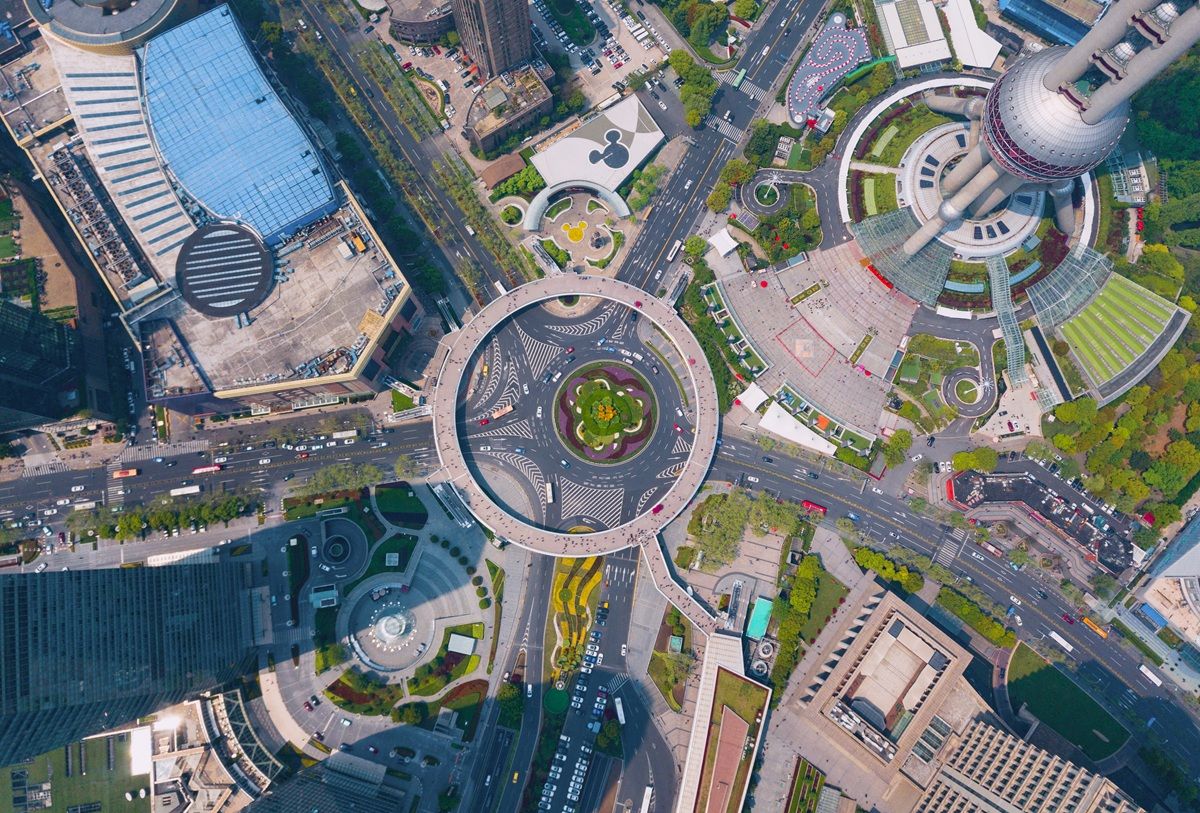 Examples from across the United States show that drones are being used, among other things, to inventory vacant lots in rapidly urbanizing areas, analyze development density in suburban neighborhoods, and plan expansions of transportation infrastructure or urban green spaces.
Accuracy and timeliness of 3D data—why traditional maps are no longer enough
Urban planning demands precision. Data resolution plays a fundamental role in the quality of professional outcomes. Incorrect dimensions or outdated information can lead to serious design consequences—whether you are working on building setback lines, transportation and green infrastructure design, or stormwater retention planning. Modern drones, combined with SkyeBrowse as photogrammetry software for 3D mapping in urban planning, are capable of achieving centimeter-level accuracy. For most urban planning tasks, this level of precision is sufficient for modeling buildings, conducting shading analyses, performing preliminary height studies, and integrating data with GIS systems.
In many cities, orthophoto maps or cadastral data are updated only every few years. In fast-changing areas—such as suburbs, brownfields, or industrial zones—this often means that data that is two or even three years old is already outdated. Drones allow urban planners to refresh datasets as frequently as every few weeks. This directly supports real-time spatial planning decisions, investment monitoring, and land revitalization efforts.
SkyeBrowse delivers fast yet highly accurate 3D models and 2D maps suitable for both public-sector use and professional engineering applications. Thanks to SkyeBrowse’s videogrammetry technology, the process of converting continuous video footage into 2D and 3D models takes only minutes, while maintaining accuracy levels that meet quality standards used in forensic applications, including the Daubert standard in the United States. This builds confidence among urban planners that the tool meets the rigorous quality requirements of their analytical work.
How does SkyeBrowse work in practice?
A typical SkyeBrowse use case from an urban planner’s perspective begins with identifying an area that requires up-to-date spatial documentation. This may include:
- a site planned for a new residential district,
- an area designated for revitalization,
- a corridor for a future bypass or ring road,
- Rapidly changing suburban areas.
The urban planner or a member of the planning team then conducts a simple drone flight, recording continuous video while flying over the area being analyzed. No advanced mission planning or complex photogrammetry settings are required. SkyeBrowse works with popular DJI and Autel drones, and thanks to the “universal upload” option, users can upload video from virtually any drone model capable of recording video at a quality sufficient for videogrammetry.
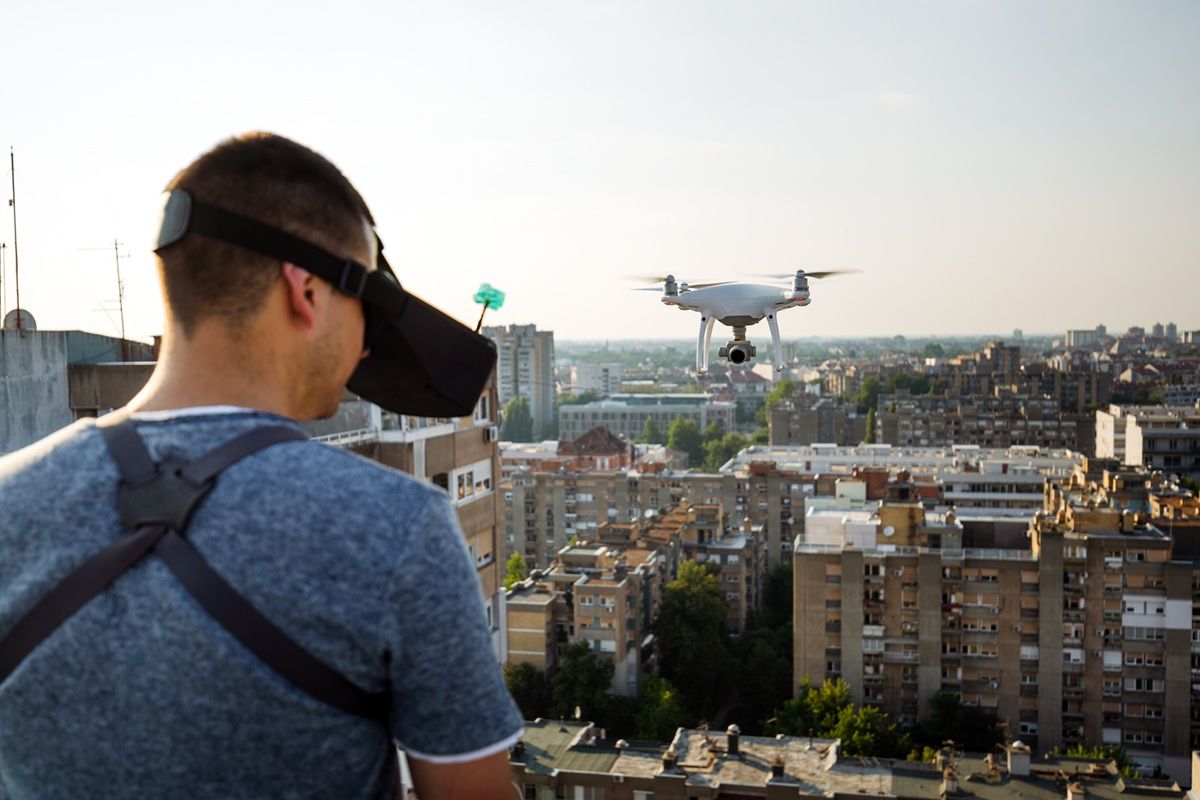 Once the flight is complete, the footage is uploaded to the SkyeBrowse platform, where it is processed in the cloud. This is the moment when the tool clearly demonstrates its advantage over traditional photogrammetry software.
Important: A process that typically takes hours—or requires outsourcing to external firms—here takes only a few minutes.
The urban planner receives a ready-to-use 3D model and a 2D map that can be immediately applied to spatial analyses. The generated models allow for:
- fast measurement of building heights,
- distance calculations relative to infrastructure,
- terrain slope analysis,
- determination of street widths,
- verification of potential green corridors,
- Monitoring spatial relationships between planned developments and the existing urban environment.
For large areas, a municipal planning team can take advantage of the Large Area 3D feature, which was designed specifically for mapping extensive, dynamically developing regions.
The project team can compare multiple development scenarios embedded within the same 3D model, verify compliance with local zoning plans, assess the impact of proposed buildings on the urban landscape, or analyze views from a resident’s perspective. The data can also be shared with other municipal departments—such as public safety, police, fire services, or crisis management teams. As a result, an investment in SkyeBrowse delivers benefits across the entire city administration.
Integration with GIS, BIM, and City Digital Twins—Drone-Based 3D as the foundation of a Digital Twin
Although data collected by drones is highly valuable on its own, its true potential is revealed only when it is integrated with municipal GIS systems, BIM environments, and platforms used for infrastructure management and transportation planning. A drone-generated 3D model represents a current layer of reality. It enables spatial analysis, development simulations, mobility-change scenarios, and impact assessments of proposed investments on their surroundings. As a result, urban planners work with a map of the city as it exists today—not as it looked several years ago.
Data captured using SkyeBrowse can feed digital twins used for infrastructure analysis, investment planning, traffic modeling, or training for public services. Equally important, SkyeBrowse simplifies collaboration across multiple municipal departments—such as spatial planning, roads and transportation, urban greenery, public safety, and municipal asset management—by centralizing up-to-date data within a single spatial model.
For urban planners, this integration delivers tangible benefits: rapid validation of urban design concepts, the ability to present development scenarios in compelling 3D formats, and the opportunity to conduct public consultations using realistic models. Visualizing future investments within their real-world context helps residents understand how their neighborhood will change and supports more constructive dialogue and public acceptance. Interest in 3D models in urban planning is growing worldwide—driven by industry reports as well as by cities that are developing digital twins to improve the quality and effectiveness of spatial planning.
Costs, data security, and implementation in city government—is it worth it for urban planners?
Traditional field surveys, outsourcing 3D modeling to external vendors, or commissioning orthophoto maps are all costly and time-consuming processes. SkyeBrowse makes it possible to replace this model with a far more cost-effective and efficient approach.
City governments or their partners can independently conduct drone flights and generate models in minutes—without relying on expensive third-party providers. Available plans, including Freemium and Pay-Per-Model, allow teams to get started without significant upfront investment and to scale their drone program flexibly as demand grows. This means you can test the tool first before committing budgeted funds allocated for a specific project.
SkyeBrowse was designed for public safety agencies in the United States, including law enforcement and fire departments. As a result, it meets stringent security and compliance requirements, such as CJIS standards for law enforcement data. These same standards are highly valuable for urban planning departments, which often work with sensitive information related to critical infrastructure, development sites, or long-term urban growth plans. A permission-based access model allows administrators to control who can view, edit, or export 3D models, further strengthening data protection and information security.