When a serious traffic collision goes to litigation or a large claim, the outcome often turns on one question: what happened, and how fast? An accident reconstruction expert—also called a collision reconstruction expert or traffic accident reconstruction expert—uses physics, engineering analysis, and scene documentation to answer that question with scientific precision. Knowing how to hire the right expert can be the difference between a defensible finding and a case that collapses under cross-examination.
Key Takeaways
- ACTAR (Accreditation Commission for Traffic Accident Reconstruction) accreditation is the strongest single credential to require when vetting a crash reconstruction expert—it requires passing a standardized exam and proving case experience.
- The Daubert standard, applied in federal courts and most state courts, requires that expert testimony be based on a testable, peer-reviewed methodology; experts who use validated computational tools and documented scene data hold up better under challenge.
- NHTSA data shows over 38,000 U.S. traffic fatalities annually, generating thousands of wrongful death and serious-injury cases that depend on qualified reconstruction testimony.
- Drone-based 3D mapping compresses scene documentation to under an hour, producing spatially accurate models that serve as persistent, court-ready evidence long after the physical scene is cleared.
- Asking a prospective expert about their documentation technology—not just their credentials—reveals whether their deliverables will survive a Daubert hearing.
Contents
- What does an accident reconstruction expert actually do?
- What credentials should you require when hiring a crash reconstruction expert?
- How does modern 3D mapping change collision reconstruction?
- How do 3D reconstruction models hold up under the Daubert standard?
- What questions should attorneys and insurers ask before retaining an expert?
- FAQ
What does an accident reconstruction expert actually do?
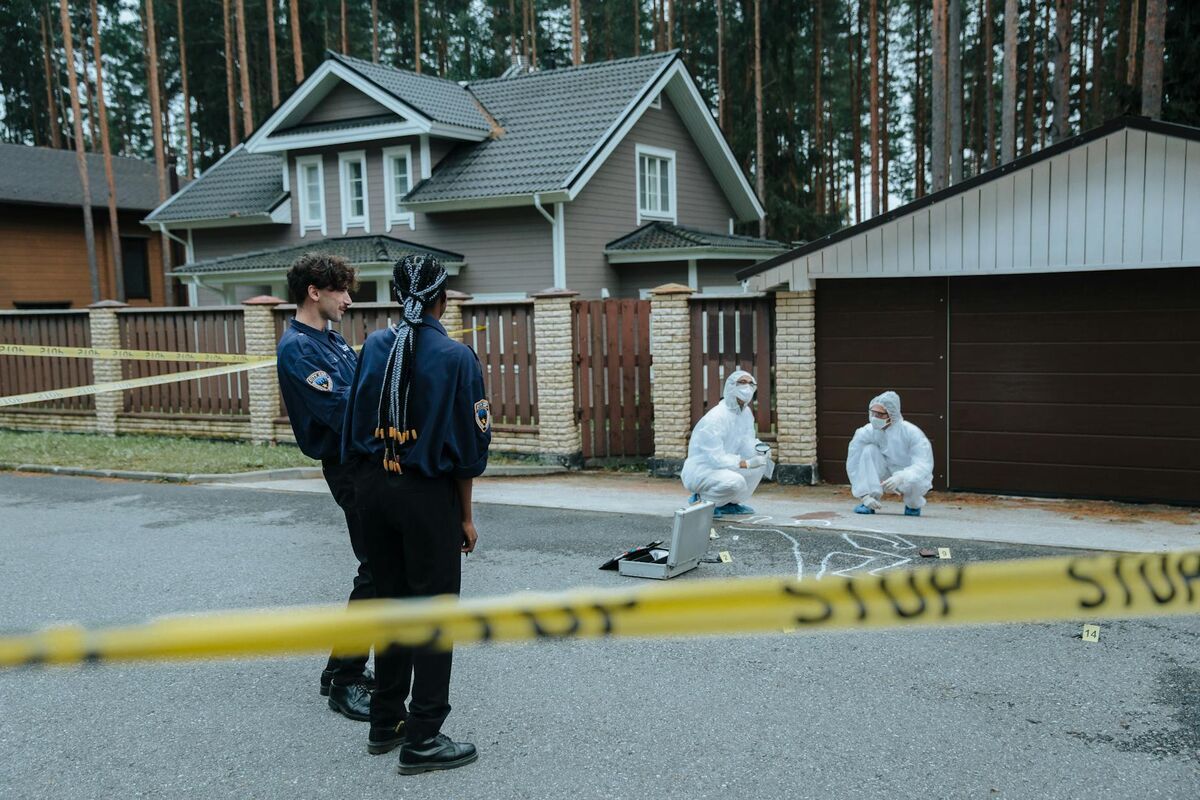
An accident reconstruction expert investigates crash scenes, analyzes physical evidence, applies principles of physics and engineering, and prepares findings that explain how a collision occurred, how fast vehicles were traveling, and which factors contributed to the outcome. Their work produces reports, diagrams, and often 3D visualizations that can be presented in court or used in settlement negotiations. A qualified accident reconstructionist does not simply describe what they observed—they derive testable conclusions from measurable data.
Core tasks include scene documentation (measurements, photographs, skid mark analysis), vehicle damage inspection, electronic data retrieval from event data recorders (EDRs), speed and momentum analysis, sight-line studies, and preparation of diagrams or 3D models. On fatality cases, the expert often coordinates with medical examiners and biomechanical engineers.
NHTSA's Traffic Safety Facts report documents more than 38,000 U.S. traffic fatalities in a single recent year. The majority of serious-injury and wrongful-death cases require at least one qualified reconstructionist to establish collision mechanics. On the insurance side, reconstruction findings drive reserve decisions and coverage determinations on large commercial and trucking claims. For complex multi-vehicle crashes, a reconstruction expert may work alongside a forensic engineering team to address structural failure, cargo loading, or road design contributions.
What credentials should you require when hiring a crash reconstruction expert?
At minimum, require ACTAR certification (Accreditation Commission for Traffic Accident Reconstruction) combined with a relevant engineering or physical science degree. ACTAR accreditation requires passing a standardized written examination in crash physics and demonstrated case experience—it is the industry's independent benchmark for reconstructionist competency. A degree in mechanical engineering, civil engineering, or physics strengthens the expert's foundation and provides clear grounds for qualifying them under court rules.
ACTAR was established to create an objective, examination-based credential that courts and parties can rely on when assessing an expert's qualifications. Unlike professional associations that grant membership through dues, ACTAR requires demonstrated knowledge. When opposing counsel challenges your expert, an ACTAR credential provides documented, third-party validation.
Beyond ACTAR, look for formal training through programs such as the Institute of Police Technology and Management (IPTM) at the University of North Florida—one of the most widely recognized multi-week crash reconstruction curricula in the country—or SAE International's crash reconstruction series. Experience in the specific crash type also matters: high-speed highway collisions, urban intersection crashes, and commercial truck rollovers each carry distinct analytical requirements. Ask for a case list with examples of prior reports in similar crash types before deciding.
How does modern 3D mapping change collision reconstruction?
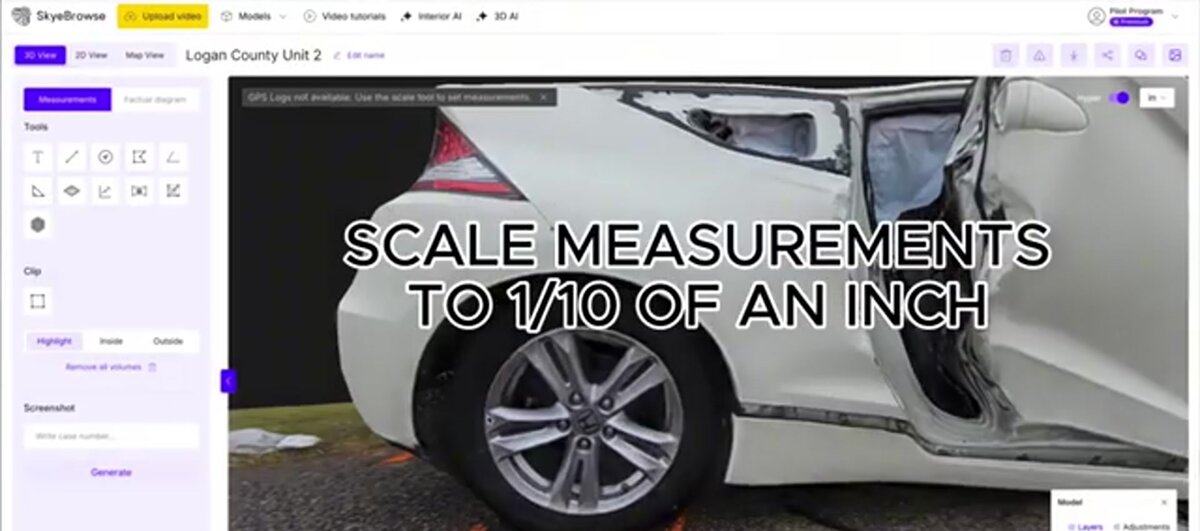
Drone-based videogrammetry—the process of converting aerial video footage into spatially accurate 3D models—has fundamentally changed how crash scenes are documented and presented. Where a traditional reconstruction relied on hand-measured diagrams and photographs that a jury must mentally assemble, a videogrammetric 3D model lets attorneys, adjusters, and jurors rotate and examine the scene as it actually appeared. Documentation that once required a full day of manual survey work can now be captured in a single drone flight and processed into a measurable 3D model within the hour.
Platforms like SkyeBrowse use videogrammetry to process drone footage directly into interactive 3D models with documented spatial accuracy. The SkyeBrowse Premium tier achieves accuracy to within approximately 0.25 inch at 8K resolution; the Premium Advanced tier delivers accuracy to approximately 0.1 inch with AI-based moving-object removal—precision that holds up against traditional total-station survey methods in contested cases. Measurements pulled directly from the model are traceable back to the underlying point cloud, creating an auditable chain from raw footage to courtroom exhibit.
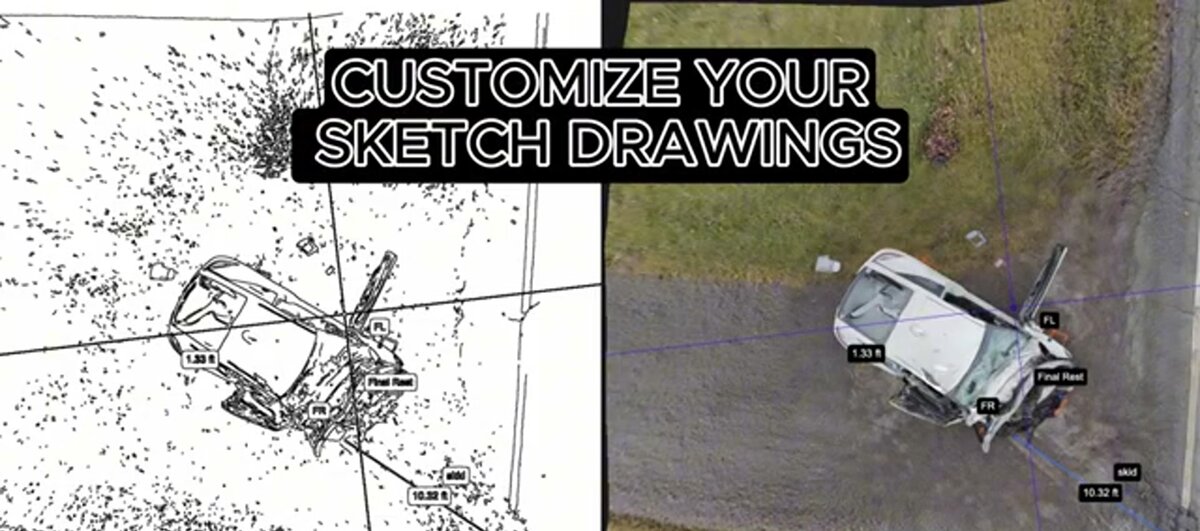
A photogrammetric model locks scene geometry at the moment of capture. Physical scenes are cleared within hours to restore traffic; skid marks fade and debris disappears. That frozen 3D record gives both sides a shared spatial reference that does not degrade over the two to three years a complex case may take to reach trial. The best accident reconstruction software integrates this 3D documentation layer with the expert's computational analysis, letting speed estimates and impact angles be overlaid directly on the scene model.
How do 3D reconstruction models hold up under the Daubert standard?
Under the Daubert standard—the federal rule governing expert testimony admissibility, adopted by most state courts—expert methods must be testable, subject to peer review, have a known error rate, and be generally accepted in the relevant scientific community. Videogrammetric 3D models satisfy these criteria when produced using validated software, documented capture procedures, and a qualified expert who can explain the methodology. The key is that the model itself is a documentation tool; admissibility ultimately depends on the expert's ability to explain and defend the process.
Courts have admitted photogrammetric and videogrammetric scene reconstructions as both demonstrative and substantive evidence. Challenges arise most often when the producing expert cannot articulate the software's accuracy parameters or when the capture methodology was inconsistent. A credentialed reconstructionist using a documented, validated workflow can close both gaps before opposing counsel raises them.
When reviewing a prospective expert's technology choices, ask: What is the published spatial accuracy of the 3D model? Has that software been independently validated? Will raw data be produced in discovery? Experts using platforms with disclosed accuracy specifications and exportable point-cloud data are far stronger positioned than those relying on proprietary tools with undisclosed error rates. Pairing an ACTAR-certified reconstructionist with a drone-based model from a platform with documented accuracy tiers addresses each Daubert prong: testable methodology, peer-reviewed technology, known error rate, and general acceptance across more than 1,200 public safety agencies.
What questions should attorneys and insurers ask before retaining an expert?
Before retaining a crash reconstruction expert, ask about their accreditation, prior testimony record, documentation technology, and experience with the specific crash type. A well-prepared expert should be able to hand you their ACTAR accreditation number, a list of cases in which they have testified, sample reports, and a clear description of how they will document and present the scene. Vague answers about methodology or an inability to explain their accuracy parameters are warning signs that the engagement will struggle under opposing scrutiny.
A structured evaluation covers four areas: (1) Credentials — verify active ACTAR accreditation, a relevant engineering or science degree, and formal training such as IPTM or the SAE crash reconstruction curriculum. (2) Courtroom track record — request cases testified in the past five years, plaintiff/defense split, and any prior Daubert exclusions. (3) Documentation technology — ask what software produces the scene model, its published spatial accuracy, whether raw data will be produced in discovery, and what deliverable formats are provided. (4) Case-type experience — confirm the expert has handled the same vehicle classes and crash geometries as your matter.
On large commercial casualty claims, retention decisions are often made within days of loss—before a lawsuit is filed—because early drone-based documentation preserves spatial evidence that disappears when the roadway is cleared.
FAQ
What is the difference between an accident reconstructionist and an expert witness?
An accident reconstructionist is a technical specialist who applies physics, engineering, and scene analysis to determine how a crash occurred. An expert witness is a legal role—anyone with specialized knowledge may qualify under court rules. Many accident reconstructionists serve as expert witnesses, but the two terms are not interchangeable. Hiring someone who is both a credentialed reconstructionist and an experienced courtroom expert provides the strongest combination for litigation or arbitration.
What does ACTAR certification mean for an accident reconstruction expert?
ACTAR certification (Accreditation Commission for Traffic Accident Reconstruction) is the leading independent credential for accident reconstructionists. Earning it requires passing a rigorous written examination covering physics, mathematics, and crash dynamics, plus demonstrated case experience. ACTAR-accredited experts carry more weight in Daubert challenges because their methodology has been independently validated against a published standard.
Can 3D drone models be used as evidence in court?
Yes. Courts have admitted photogrammetric 3D models as demonstrative and substantive evidence in crash litigation. The models must be produced using a scientifically validated method and tied to a qualified expert who can explain the methodology under cross-examination. Drone-based videogrammetry platforms like SkyeBrowse produce spatially accurate models with documented accuracy specifications, making them suitable for Daubert scrutiny when presented by a credentialed accident reconstructionist.
How long does drone-based scene documentation take?
A trained operator can complete a capture flight of a typical two-vehicle crash scene in 15 to 30 minutes; SkyeBrowse processes the footage into a measurable 3D model in similar time. Traditional total-station survey work for the same scene typically takes several hours. The speed advantage matters most when the scene must be cleared quickly and when an insurer or law firm needs spatial data the same day as the loss.
What should I do if the crash scene has already been cleared?
Experts can still reconstruct crashes from police reports, photographs, vehicle damage, EDR data, and witness statements. Reconstruction quality is substantially higher when a 3D model is captured before the scene is cleared. Insurers on large commercial claims increasingly retain reconstruction support at notice of loss rather than waiting for suit.