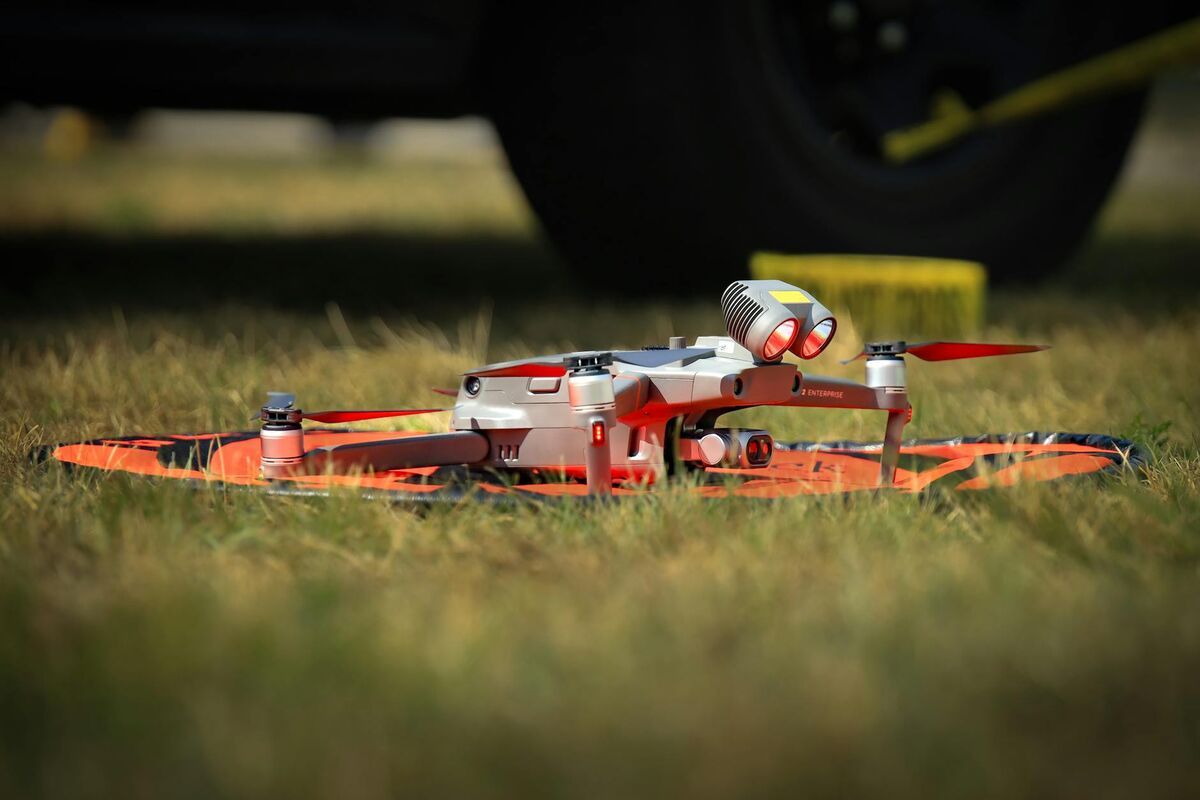
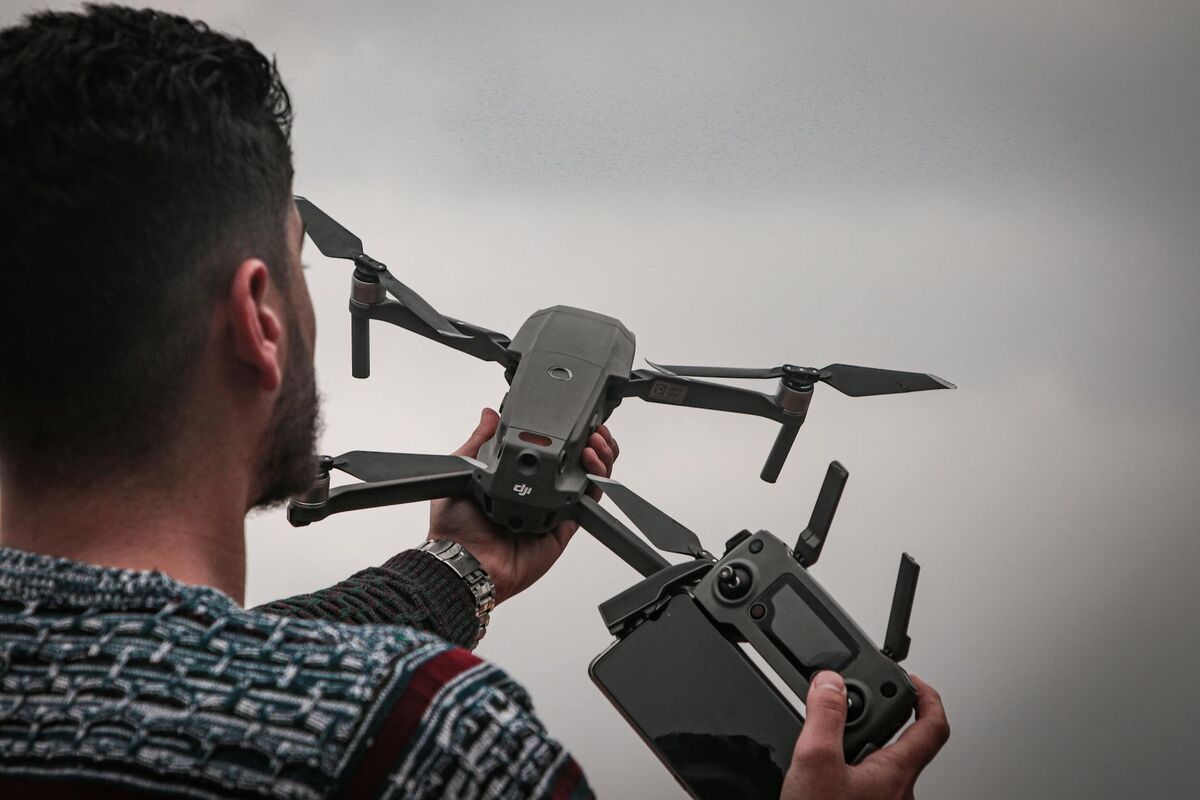
Part 107 is the FAA's Small Unmanned Aircraft Systems rule — codified in 14 CFR Part 107 — that requires anyone flying a drone for commercial purposes to hold a remote pilot certificate. It sets operational limits, airspace access rules, and pilot qualification standards for all small UAS weighing between 0.55 and 55 pounds operated for business or compensation in U.S. airspace.
The FAA's Part 107 rule, which took effect in August 2016, replaced a patchwork of waivers that had governed commercial drone use beforehand. Any pilot flying for compensation, business purposes, or professional deliverables — including mapping, inspection, and documentation — must hold a valid remote pilot certificate issued under Part 107. This guide covers every major requirement: eligibility, the application process, the knowledge exam, waivers, recurrent testing, and how the certification connects to real-world commercial workflows.
Key Takeaways
- Any drone operation flown for business purposes in the United States requires a Part 107 remote pilot certificate from the FAA — recreational rules do not apply.
- The Part 107 knowledge test covers 60 multiple-choice questions across eight topic areas; a score of 70% or higher is required to pass.
- Standard Part 107 allows flights up to 400 feet AGL, during daylight or twilight hours, with anti-collision lighting required for night ops — all without a waiver.
- Pilots must pass a recurrent knowledge test every 24 calendar months to maintain current operating privileges.
- Waivers are available for operations that exceed standard rules — including beyond visual line of sight (BVLOS), operations over moving vehicles, and certain controlled airspace — but require an FAA application with a safety case.
Contents
- What is FAA Part 107 and who needs it?
- How do you apply for the Part 107 remote pilot certificate?
- What does the Part 107 knowledge test cover?
- How do you prepare for and pass the Part 107 exam?
- What are Part 107 waivers and when do you need one?
- How does Part 107 certification connect to commercial mapping work?
- FAQ
What is FAA Part 107 and who needs it?
FAA Part 107 applies to any person piloting a drone weighing 0.55 to 55 pounds for business, compensation, or professional use. That pilot must hold a Part 107 remote pilot certificate before any commercial flight. The rule covers airspace access, operational limits, and remote pilot responsibilities across the contiguous United States.
Under Part 107, a pilot must be at least 16 years old, pass an aeronautical knowledge test at an FAA-approved testing center, and undergo a Transportation Security Administration background check. The certificate itself has no expiration date, but operating privileges lapse if the pilot does not complete a recurrent knowledge test every 24 calendar months.
The "commercial" threshold is broader than most new pilots expect. Flying for real estate photos, inspecting rooftops for a fee, collecting mapping data for a construction client, or even posting footage to a monetized social media account all fall under Part 107. The FAA provides detailed guidance at faa.gov/uas for operators unsure whether their use case requires certification.
Standard Part 107 operating rules include: maximum altitude of 400 feet above ground level (AGL), operations within visual line of sight of the remote pilot, daylight and civil twilight hours (with anti-collision lighting after sunset), maximum groundspeed of 100 mph, and no flights over moving vehicles or people unless specific conditions are met. These defaults cover the vast majority of professional mapping and inspection use cases without any additional paperwork.
What does the Part 107 knowledge test cover?
The Part 107 aeronautical knowledge test consists of 60 multiple-choice questions drawn from eight subject areas. These include airspace classification, weather interpretation, drone loading and performance, crew resource management, radio communications, airport operations, emergency procedures, and FAA regulations. Applicants have 120 minutes to complete the test at an approved PSI or CATS testing center.
Of the eight tested areas, airspace classification and weather tend to generate the most study time for new applicants. Airspace questions require familiarity with the six classes of controlled and uncontrolled airspace (A through G), airport traffic areas, temporary flight restrictions (TFRs), and how to read sectional charts. Weather questions focus on interpreting METARs, TAFs, winds-aloft forecasts, and understanding how atmospheric conditions affect drone performance.
The remaining topic areas are more directly operational. Loading and performance questions address center of gravity, payload effects on flight time, and how temperature and altitude reduce battery efficiency. Crew resource management questions test judgment in multi-operator scenarios. Emergency procedures cover lost-link behavior, fly-away situations, and required reporting to the FAA.
The test fee is $175 at most testing centers. The FAA publishes its full aeronautical knowledge test question bank as part of the Remote Pilot study guide, which is available at no cost at faa.gov/uas. Third-party platforms including Pilot Institute, UAV Coach, and Gold Seal offer structured courses that combine the FAA material with practice exams, typically in 8 to 15 hours of study content.

How Do You Apply for the Part 107 Remote Pilot Certificate?
Obtaining a Part 107 remote pilot certificate follows a five-step process: get an FAA Tracking Number, submit your application through IACRA, schedule and pass the aeronautical knowledge test at a PSI testing center, clear the TSA security background check, and receive your remote pilot certificate from the FAA.
The application sequence for a Part 107 remote pilot certificate is more straightforward than many candidates expect, but each step must happen in the right order.
Step 1 — Get your FAA Tracking Number (FTN). Create a profile in the Integrated Airman Certification and Rating Application (IACRA) system at iacra.faa.gov. When you complete your profile, the system assigns you a unique FAA Tracking Number. Write it down — you will need it at the testing center.
Step 2 — Start your IACRA application. Log into IACRA, select "Start New Application," and choose the "Remote Pilot Certificate with a Small UAS Rating" option. Complete all required fields and submit the application. Your FTN links your IACRA record to the test result when it comes back from the testing center.
Step 3 — Schedule your knowledge test at a PSI testing center. The FAA contracts with PSI Exams Online to administer the Part 107 aeronautical knowledge test at hundreds of locations nationwide. Visit faa.psiexams.com to find a testing center near you and book a date. Bring a government-issued photo ID and your FTN on test day.
Step 4 — Pass the knowledge test with a score of 70% or higher. The test has 60 multiple-choice questions covering airspace, weather, regulations, and drone operations. You have 120 minutes to complete it. Your score report is generated immediately at the testing center; the pass/fail result is transmitted to the FAA electronically.
Step 5 — Clear the TSA security background check. After passing the test, the FAA initiates a Transportation Security Administration background check automatically. This process typically takes a few business days to a few weeks. You cannot exercise remote pilot privileges until the FAA confirms your background check is complete and issues your temporary certificate via IACRA.
Once cleared, you can download and print a temporary remote pilot certificate from IACRA, which is valid while the plastic certificate card ships by mail. Keep your remote pilot certificate on your person — or accessible electronically — during every commercial flight.
How do you prepare for and pass the Part 107 exam?
Effective Part 107 preparation combines three elements: reading the FAA's free Remote Pilot study guide, completing a structured online course covering all eight topic areas, and taking multiple full-length practice exams under timed conditions. Most candidates who follow this approach pass on their first attempt with a score well above the 70% minimum.
The free FAA Remote Pilot — Small Unmanned Aircraft Systems study guide covers all eight topic areas in detail, with explanations and sample questions at the end of each chapter. It is the most authoritative prep resource because the actual test draws directly from FAA source material. Candidates who skip the study guide and rely solely on third-party question banks often struggle with weather and airspace questions that require conceptual understanding rather than memorization.
For airspace reading specifically, practicing with actual sectional charts is more effective than text descriptions alone. SkyVector (skyvector.com), a free sectional chart viewer, displays current sectional charts and TFRs, and working through real chart sections for airports near your area builds chart-reading speed faster than any flashcard system.
Scheduling matters too. Testing centers in major metro areas often have two-to-four week waits. Register for a test date before you finish studying so you have a concrete deadline. On test day, the testing center provides scratch paper — use it for airspace classification diagrams and weather calculation steps, where errors under time pressure are most common.
What are Part 107 waivers and when do you need one?
A Part 107 waiver allows a certified remote pilot to operate outside the standard rules — most commonly for beyond visual line of sight (BVLOS) flights, operations over moving vehicles, nighttime operations without anti-collision lighting (pre-2021 rule, now largely superseded), and flights in controlled airspace without LAANC authorization. Waiver applications are submitted through the FAA DroneZone portal and require a detailed safety case.
The most commonly requested waivers fall into a few categories. BVLOS waivers enable mapping and inspection workflows where the operator cannot keep the drone in unaided visual sight — critical for large infrastructure corridors like pipelines, highways, and power lines. Operations over moving vehicles waivers are relevant for traffic incident documentation and highway inspection. The FAA reviews these applications against published safety guidelines and may require specific mitigation measures such as observers, redundant communication links, or geofencing systems.
Not every beyond-standard operation requires a waiver. Controlled airspace access for routine operations is handled through LAANC (Low Altitude Authorization and Notification Capability), an automated system that grants near-real-time airspace authorizations at altitudes published by the FAA. Many airports in the contiguous United States are covered by LAANC, and authorized flights can be approved in seconds through partner apps. Full details on the waiver process are available at the FAA Part 107 waivers page.
Remote ID is a separate but related requirement. Since September 2023, most drones flown under Part 107 must broadcast a remote identification signal — essentially a digital license plate — during flight. The FAA's Remote ID guidance covers compliant broadcast module options and drone models with built-in Remote ID. Pilots operating drones purchased before the Remote ID rule took effect may need to add a broadcast module to remain compliant.
How does Part 107 certification connect to commercial mapping work?
Part 107 certification is the entry point for commercial drone work, but it is the platform you fly with — not just the license you carry — that determines the quality of deliverables you can produce. Certified pilots working in mapping, surveying, construction, inspection, and public safety use specialized software to turn the video and imagery they collect into measurable 3D models, orthomosaics, and point clouds.
Once a pilot holds their certificate, the next step in building a commercial drone workflow is selecting a processing platform suited to their industry. For pilots doing drone mapping, drone surveying, or drone inspection services, the value delivered to clients depends entirely on what the software produces from the footage captured in the field.
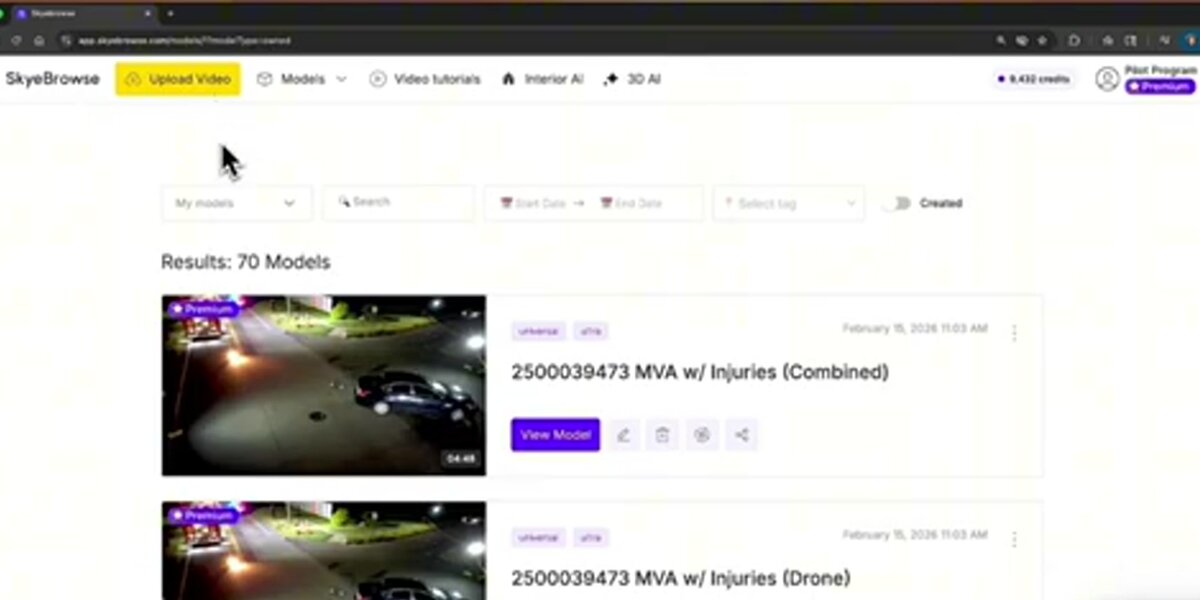
SkyeBrowse is a cloud-based videogrammetry platform used by certified pilots across public safety, construction, insurance, and infrastructure inspection. Rather than requiring still-photo capture modes or complex ground control point setups, SkyeBrowse processes standard drone video — including footage from DJI Mavic 3E, Matrice 350 RTK, and consumer models — directly into georeferenced 3D models and orthomosaics. Pilots upload their .MP4 or .MOV files to app.skyebrowse.com; the platform handles photogrammetric reconstruction in the cloud without requiring a high-end workstation.
For pilots building a commercial drone services business, the platform tier chosen depends on the accuracy required by clients. Inspection and documentation work for law enforcement or insurance can use Standard or Lite processing to produce quick deliverables. Survey-grade projects — where clients need submeter or sub-inch accuracy — use Premium or Premium Advanced tiers, which support higher-resolution outputs and AI-assisted moving object removal. Clients interested in drone services pricing should factor in both the cost of certified pilot time and the per-model or subscription cost of the processing platform.
The combination of a Part 107 certificate and a professional processing platform is what transforms a hobby drone pilot into a commercial operator who can deliver actionable data. Pilots building out that commercial workflow — whether for drone mapping, drone surveying, or broader drone services — will find that software selection is as important as the drone itself.
FAQ
How hard is the Part 107 drone certification exam?
The Part 107 knowledge test has 60 multiple-choice questions and requires a 70% passing score. Most candidates who study 10 to 20 hours using FAA study materials and practice exams pass on the first attempt. The hardest sections for most pilots are airspace classification and weather interpretation.
How long does a Part 107 remote pilot certificate last?
A Part 107 remote pilot certificate does not expire, but pilots must pass a recurrent knowledge test every 24 calendar months to keep their operating privileges current. The recurrent test can be taken at any FAA-approved testing center and covers the same topic areas as the initial test.
Can I fly at night with a Part 107 certificate?
Yes. As of April 2021, night operations are allowed under standard Part 107 rules as long as the drone has anti-collision lighting visible for at least 3 statute miles. No waiver is required for nighttime flights under 400 feet AGL in uncontrolled airspace with proper lighting equipment installed.
Do I need Part 107 to fly for a government agency or fire department?
Yes. Government employees and contractors piloting drones for official agency purposes — including public safety, fire, and law enforcement — must hold a valid Part 107 remote pilot certificate unless the agency operates under a separate COA (Certificate of Waiver or Authorization) issued by the FAA. Most agencies require Part 107 for all UAS operators.
What software do Part 107 pilots use for commercial mapping?
Most commercial pilots use cloud-based photogrammetry or videogrammetry platforms to process drone footage into deliverables. SkyeBrowse processes drone video directly into 3D models and orthomosaics without requiring specialized hardware. Pilots working in public safety and infrastructure inspection use it to generate court-ready or client-ready spatial documentation from standard flight video.