ACTAR certification — earned through the Accreditation Commission for Traffic Accident Reconstruction — is the most widely recognized professional credential in the collision reconstruction field. Whether you work in law enforcement, forensic consulting, or litigation support, ACTAR accreditation signals that your methodology meets a verified national standard. This guide covers what ACTAR requires, how to prepare for the exam, how to maintain your credential, and how emerging tools like drone-based 3D mapping are changing the day-to-day work of certified reconstructionists.
Key Takeaways
- ACTAR (Accreditation Commission for Traffic Accident Reconstruction) is the leading professional credential for collision reconstructionists, recognized by courts, law enforcement agencies, and insurance carriers nationwide.
- Candidates must complete 48 semester credit hours of approved coursework before sitting for the written accreditation exam — programs at institutions like the University of North Florida's IPTM or Northwestern University's Center for Public Safety are commonly used.
- Active ACTAR accreditation requires 48 Continuing Education Units every three years, keeping certified professionals current with evolving techniques and technology.
- Drone-generated 3D models now give certified reconstructionists measurable spatial data accurate to a fraction of an inch, directly supporting the scientific documentation standards ACTAR-accredited work demands.
- SkyeBrowse is used by more than 1,200 public safety agencies and produces court-ready 3D models and sketch diagrams that certified reconstructionists can present alongside traditional evidence.
Contents
- What is ACTAR and who should pursue it?
- What are the requirements to sit for the ACTAR exam?
- What does the ACTAR exam cover?
- ACTAR Study Guide & Exam Prep
- How do you maintain ACTAR accreditation?
- How do modern documentation tools support ACTAR-level reconstruction workflows?
- FAQ
What is ACTAR and who should pursue it?
ACTAR, which stands for the Accreditation Commission for Traffic Accident Reconstruction, is an independent credentialing body that evaluates and certifies professionals in the field of traffic collision reconstruction. Founded in 1991, ACTAR sets the educational, examination, and continuing education standards that define professional competency in the discipline. The credential is held by law enforcement officers, forensic engineers, private consultants, and expert witnesses who reconstruct the causes and dynamics of traffic crashes.
The need for a standardized credential grew from the expanding role of reconstruction specialists in civil and criminal courts. Judges applying the Daubert standard — which requires that expert testimony rest on reliable methodology — began scrutinizing reconstructionist credentials more closely. ACTAR accreditation provides a documented proof point: the holder has completed a defined body of coursework and passed a rigorous written examination developed by practicing experts.
Who benefits most from ACTAR accreditation? Traffic homicide investigators, major crash unit detectives, and forensic engineers who regularly provide sworn testimony are the primary audience. Private consultants hired by plaintiff and defense counsel in personal injury litigation also pursue ACTAR to strengthen their qualifications in deposition and at trial. If your work regularly involves collision reconstruction that ends up in a courtroom or administrative proceeding, ACTAR accreditation is a professional differentiator that carries real weight.
According to ACTAR's official roster, several thousand professionals hold active accreditation across the United States, Canada, and internationally — a comparatively small pool given how frequently crash reconstruction testimony is needed in litigation and enforcement contexts.
What are the requirements to sit for the ACTAR exam?
To apply for ACTAR accreditation, a candidate must document 48 semester credit hours (or the equivalent) of approved traffic accident reconstruction coursework. At least 36 of those hours must cover core reconstruction topics — physics of collisions, vehicle dynamics, roadway evidence analysis, and human factors. The remaining hours can come from supporting subjects such as traffic engineering or forensic documentation. Candidates must also provide verification of practical field experience.
The 48-credit requirement is designed to ensure candidates have genuine depth across the technical disciplines that reconstruction demands. Core subject areas include:
- Physics and mathematics of collisions — momentum, energy, and velocity calculations that form the analytical foundation of every reconstruction
- Vehicle dynamics — braking performance, tire friction coefficients, yaw and rollover mechanics
- Scene evidence analysis — skid marks, yaw marks, gouge marks, debris fields, and roadway geometry
- Human factors — perception-reaction time, conspicuity, and driver impairment assessment
- Forensic documentation — photography, measurement, and diagramming of crash scenes
Several institutions offer approved coursework that counts toward the 48-credit threshold. The Institute for Police Technology and Management (IPTM) at the University of North Florida offers one of the most established curricula, with individual courses ranging from basic traffic investigation through advanced reconstruction. The Northwestern University Center for Public Safety offers another well-regarded track. Many state police academies and community college programs also hold ACTAR approval for specific courses.
Candidates submit an application package that includes transcripts, training certificates, and supervisor verification of field experience. ACTAR staff reviews the package and confirms eligibility before issuing an examination authorization.
What does the ACTAR exam cover?
The ACTAR accreditation exam is a written, closed-book test covering the full scope of traffic accident reconstruction knowledge. Questions span momentum and energy analysis, speed estimation methods, pedestrian and bicycle crash dynamics, occupant kinematics, vehicle systems, and scene documentation. The exam is administered during scheduled testing windows and must be completed within the allotted time. A passing score is required; candidates who do not pass may retake the exam after a waiting period.
The exam reflects the breadth of knowledge that ACTAR considers necessary for competent practice. Speed estimation is tested across multiple methods — time-distance analysis, crush energy, critical speed yaw, momentum, and energy — because no single method applies to every crash type. Scenario-based questions require candidates to select the appropriate analytical method for a given crash type, identify the limitations of available evidence, and recognize common errors in reconstruction reasoning. This emphasis on applied judgment — not just computational skill — is what makes ACTAR accreditation meaningful to courts and carriers evaluating an expert's qualifications.
ACTAR Study Guide & Exam Prep
The ACTAR accreditation exam is a written, closed-book test. Most candidates report it runs between 100 and 150 questions and must be completed in a single timed session. ACTAR does not publicly publish a precise question count or time limit, but practice-exam guides from institutions like IPTM and Northwestern NUCPS consistently reflect that scope. A passing score is required; candidates who fall short may retake the exam after satisfying a waiting period set by ACTAR. Check actar.org directly for the current examination schedule and any updated fee information.
Accredited programs worth knowing
Three institutions are consistently cited by ACTAR candidates as exam-relevant preparation paths:
- Northwestern University Center for Public Safety (NUCPS) — One of the oldest accredited Traffic Crash Investigation sequences in North America; ACTAR recognizes NUCPS courses for credit hours. (nucps.northwestern.edu)
- Institute for Police Technology and Management (IPTM) at the University of North Florida — Highly modular curriculum covering traffic homicide investigation, vehicle dynamics, and pedestrian crash reconstruction; course catalog aligns closely with ACTAR's core topic weighting. (unf.edu/iptm)
- Texas A&M Engineering Extension Service (TEEX) — Multi-day intensives for law enforcement and forensic engineers covering momentum, energy, and speed estimation methods. Verify current ACTAR approval status at time of enrollment. (teex.org)
State-level programs through the Southern Police Institute, California POST, and similar bodies may also carry ACTAR approval for specific courses. Always confirm eligibility before enrolling.
A practical ACTAR exam study plan
Passing ACTAR requires breadth, not just depth. The exam tests your ability to select the right analytical method for a given scenario and recognize its limitations — not just execute formulas. A four-to-six-month structured plan tends to outperform cramming:
- Audit and gap-fill (Months 1–2): Map completed courses against ACTAR's core topic areas. Identify thin spots — pedestrian dynamics, human factors, EDR analysis are common gaps — and enroll in targeted IPTM or TEEX modules before registering for the exam.
- Foundational review (Month 3): Work through IPTM's reconstruction series and the relevant SAE references, focusing on momentum, energy, critical speed yaw, and crush methods. Build a formula reference sheet you can reconstruct from memory; the exam is closed-book.
- Scenario practice (Months 4–5): Apply multiple speed estimation methods to the same crash and compare outputs. Understand when crush energy is appropriate versus momentum, and why evidence limitations constrain method selection.
- Test readiness (Month 6): Run timed practice sets. Human factors and perception-reaction questions are consistently under-prepared. Review scene documentation standards — ACTAR expects familiarity with forensic photography, measurement protocols, and diagram conventions.
ACTAR exam topic checklist — get the PDF
SkyeBrowse has compiled a one-page ACTAR Exam Topic Checklist PDF that maps the major subject areas to corresponding study resources and self-assessment questions. Request a copy through our resources page or contact us directly — it is available at no cost to law enforcement and forensic engineering professionals preparing for ACTAR accreditation.
How do you maintain ACTAR accreditation?
ACTAR accreditation must be renewed every three years. Renewal requires 48 Continuing Education Units (CEUs) earned through approved activities during the renewal cycle. Approved activities include ACTAR-sanctioned courses, attendance at ACTAR's annual symposium, publication of peer-reviewed reconstruction research, and qualifying professional development programs offered by institutions with ACTAR educational recognition.
The continuing education requirement exists because accident reconstruction is not static. Vehicle technology evolves — advanced driver assistance systems (ADAS), automatic emergency braking, and event data recorder (EDR) formats introduce new evidence types and analytical demands. NHTSA research consistently identifies new crash patterns as the vehicle fleet changes, and reconstruction experts must stay current with those patterns to provide reliable analysis.
CEUs can be earned through a mix of formal coursework and professional activities. A major crash investigator who attends an IPTM refresher course in EDR analysis, presents a case study at a regional traffic safety conference, and completes an online module in human factors can typically accumulate the 48 CEUs needed within a normal three-year work cycle without disrupting operations. ACTAR accreditation holders report CEUs directly to ACTAR, with documentation of each activity.
The renewal process also keeps practitioners connected to the broader professional community. Peer exchange at conferences and symposia is where many practitioners first encounter new documentation technology — including the drone-based 3D mapping platforms that have become standard equipment at major crash units across the country.
How do modern documentation tools support ACTAR-level reconstruction workflows?
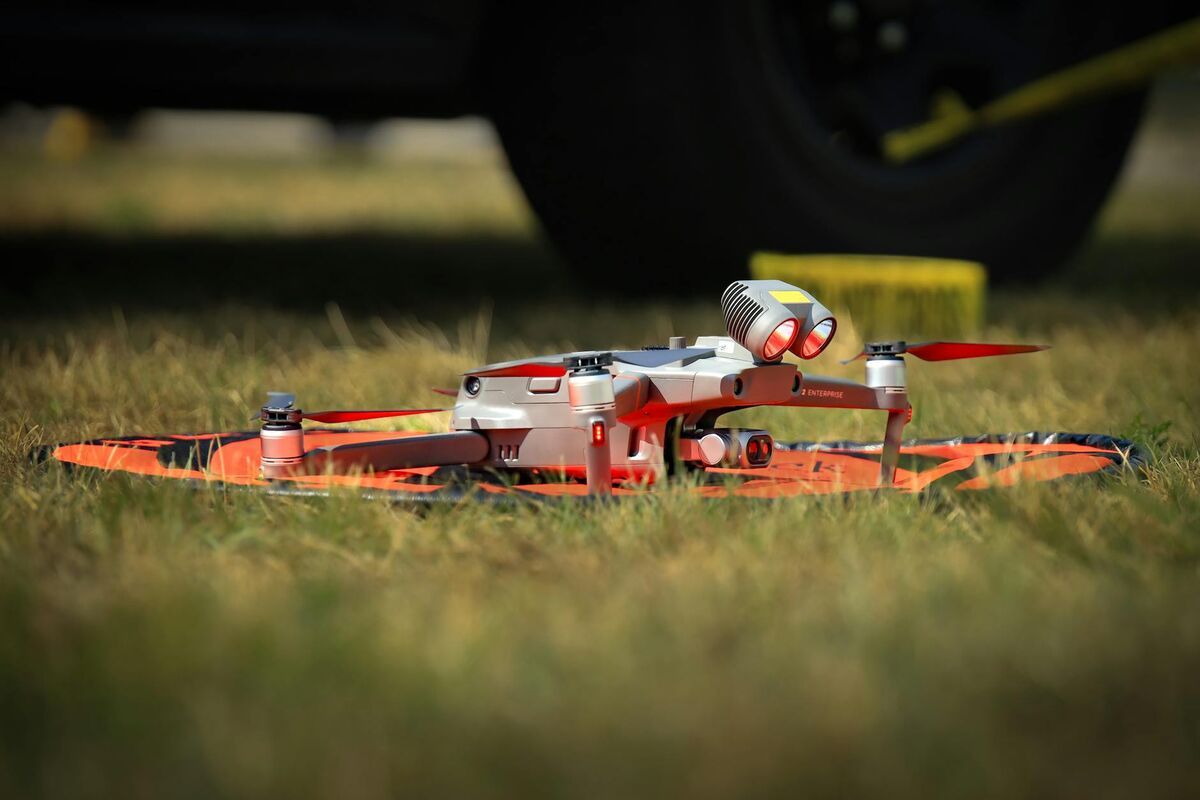
ACTAR-accredited reconstructionists require documentation that is spatially accurate, reproducible, and defensible in court. Modern drone-based photogrammetry — the process of extracting precise measurements from overlapping photographs or video — now delivers scene models with sub-inch spatial accuracy from a single drone flight. These models give certified experts a three-dimensional record of the scene geometry that can be revisited, measured, and annotated long after the roadway has been reopened.
Traditional crash scene documentation relied on total station measurements, hand-laid tape, and two-dimensional diagrams. That approach produces a fixed artifact — if a measurement is challenged in deposition, the reconstructionist can only point back to field notes. A georeferenced 3D model changes that dynamic: every spatial relationship is preserved, and measurements can be taken directly from the model during testimony.
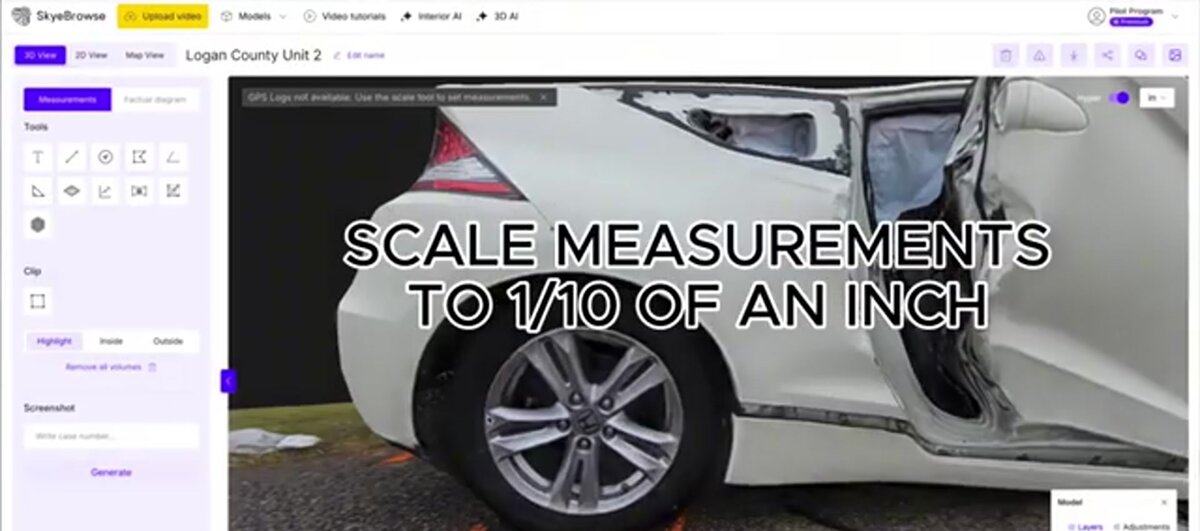
SkyeBrowse is a cloud-based videogrammetry platform used by more than 1,200 public safety agencies. A drone operator flies an overhead pattern, uploads the video, and receives a processed 3D model within minutes — with point-to-point measurements scaled to 1/10 of an inch. Spatial evidence supporting speed calculations, point-of-impact analysis, and vehicle position documentation is captured before the scene is cleared, not reconstructed from memory afterward.
The platform also auto-generates top-down sketch diagrams directly from the 3D model that certified experts can present alongside traditional evidence. See the sketch-vs-model comparison below.
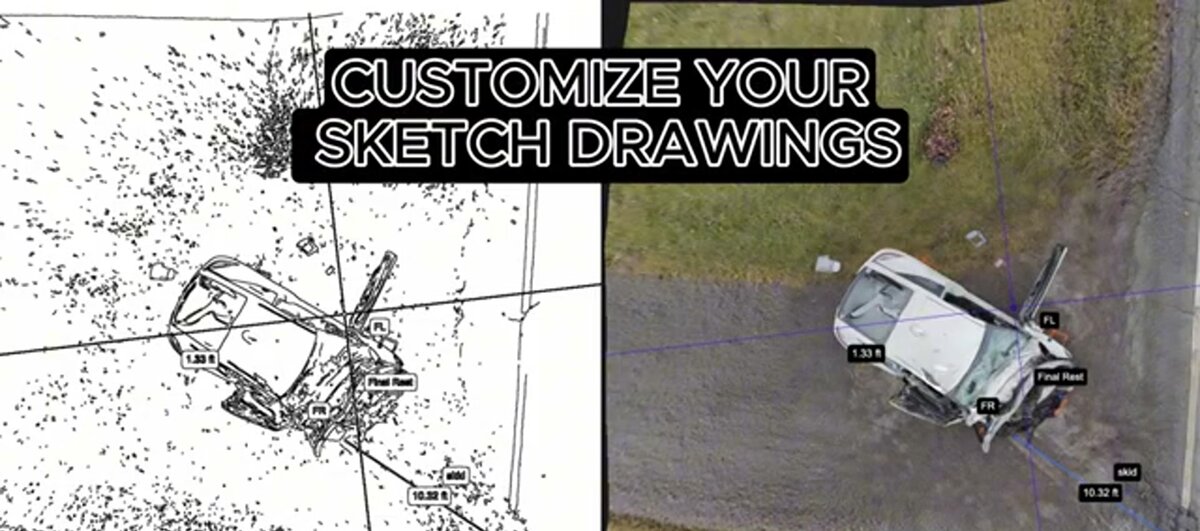
ACTAR-accredited professionals working with drone documentation tools will find that the combination of certified analytical skills and spatially accurate scene models strengthens both the reliability of the reconstruction and its credibility under cross-examination. For a broader look at the software landscape, see our guide to accident reconstruction software. Professionals interested in the evidentiary and engineering dimensions of crash reconstruction should also review our overview of forensic engineering, which covers the intersection of engineering analysis and legal proceedings.
FAQ
How long does it take to get ACTAR certified?
Most candidates spend two to four years building the required 48 semester credit hours of approved coursework before sitting for the ACTAR exam. The exam itself is a single-session written test; results are typically released within a few weeks of the testing window.
How many continuing education credits does ACTAR require?
ACTAR requires 48 Continuing Education Units (CEUs) every three years to maintain active accreditation. Credits can be earned through approved courses, conferences such as ACTAR's annual symposium, and qualifying professional development activities.
Is ACTAR accreditation required to testify as an accident reconstruction expert?
ACTAR accreditation is not legally required to testify as an expert witness, but courts and opposing counsel increasingly scrutinize a reconstructionist's credentials. ACTAR accreditation demonstrates a standardized level of knowledge and is widely recognized in civil and criminal litigation as a mark of professional competency.
How do I prepare for the ACTAR exam?
Start by auditing your 48 credit hours against ACTAR's core topic areas and filling gaps through programs at IPTM, Northwestern NUCPS, or TEEX. Spend four to six months on focused study of speed estimation methods, momentum and energy calculations, and scenario-based reasoning. The exam rewards applied judgment over formula recall — practice selecting the right method for a given crash type, not just executing the math.