University and corporate campuses present one of the most challenging environments for security planning: dozens of buildings, thousands of occupants, and response teams who may never have entered a specific structure before an incident. Campus security preplanning — systematically documenting facilities and rehearsing response strategies before a crisis — has long depended on outdated floor plans and static photos. Videogrammetry (converting standard video into navigable 3D models) changes that by letting campus police and safety directors build interactive facility intelligence at a fraction of the traditional cost.
Key Takeaways
- A single operator can capture and process a full building model in under 10 minutes using existing video equipment — no specialist required.
- Campus drone mapping covers exterior overviews and approach routes; smartphone or 360-camera capture handles interior corridors, stairwells, and assembly areas.
- Facility models produced at Premium accuracy (8K, 0.25 inch) support egress compliance verification and evacuation capacity calculations directly from the spatial dataset.
- Secure, permission-based sharing lets mutual aid partners access specific building models without receiving the entire facility library.
- Clery Act documentation and post-incident investigations benefit from archived 3D models that provide objective evidence of security measures and facility conditions at a specific point in time.
Contents
- Why do campus security teams need 3D facility models?
- How does campus drone mapping work across multi-building environments?
- What can security planners actually do with a completed facility model?
- How does videogrammetry support Clery Act compliance and secure documentation?
- What does the cost and time comparison look like versus traditional security surveys?
- FAQ
Why do campus security teams need 3D facility models?
When an active threat, fire, or medical emergency occurs, responding officers and first responders navigate unfamiliar buildings under extreme stress with incomplete information. Pre-built 3D facility models give every responder — including mutual aid officers from neighboring agencies — the ability to review building layouts, identify entry points, and plan approach routes before they ever step through a door.
Traditional campus security surveys rely on architectural drawings that lag renovations by years and written reports that can't convey spatial relationships. An officer clearing a multi-story building needs to know where stairwells connect, where corridors dead-end, and where barricade-capable rooms exist — none of which transfers reliably from a two-dimensional floor plan under operational stress.
The Department of Education's Campus Safety and Security Data Analysis Tool and Clery Act compliance requirements make documented security preparedness a legal obligation. FEMA's Active Threat Incident Planning resources emphasize pre-incident facility familiarity as one of the most significant variables in response outcomes. The bottleneck has always been the cost and time required to build that intelligence at campus scale.
Departments already mapping crime scenes or traffic incidents will find the same drone mapping workflow used for public safety operations applies directly to campus preplanning — the capture method is identical, just applied proactively.
How does campus drone mapping work across multi-building environments?
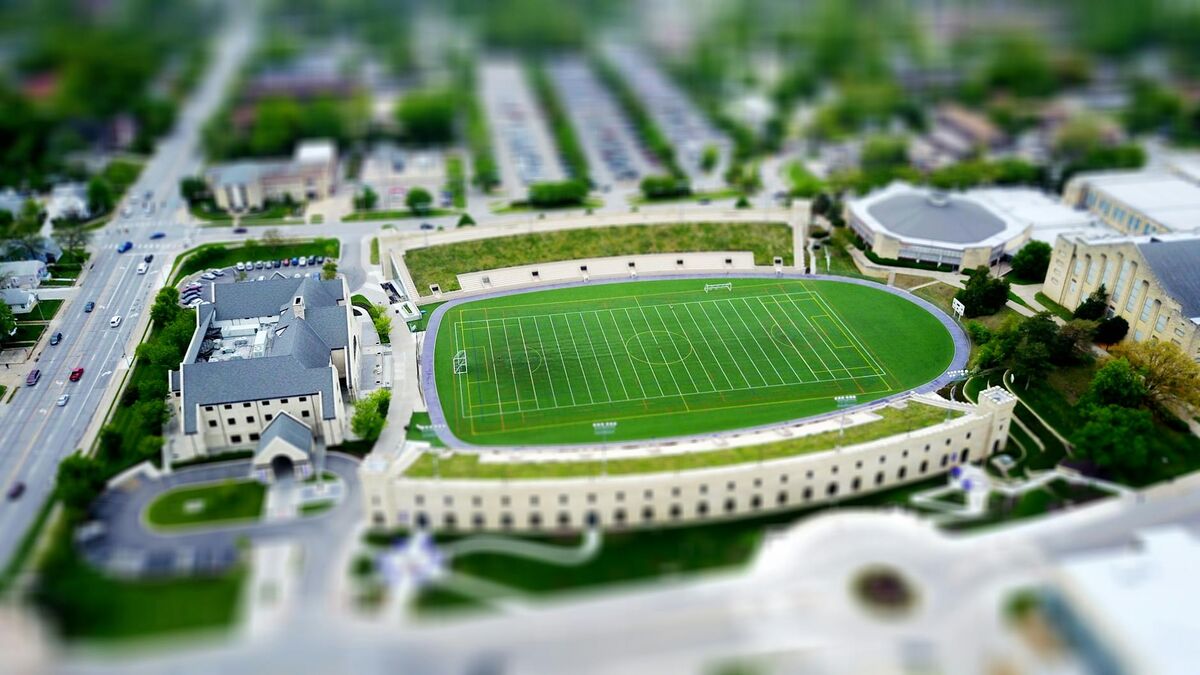
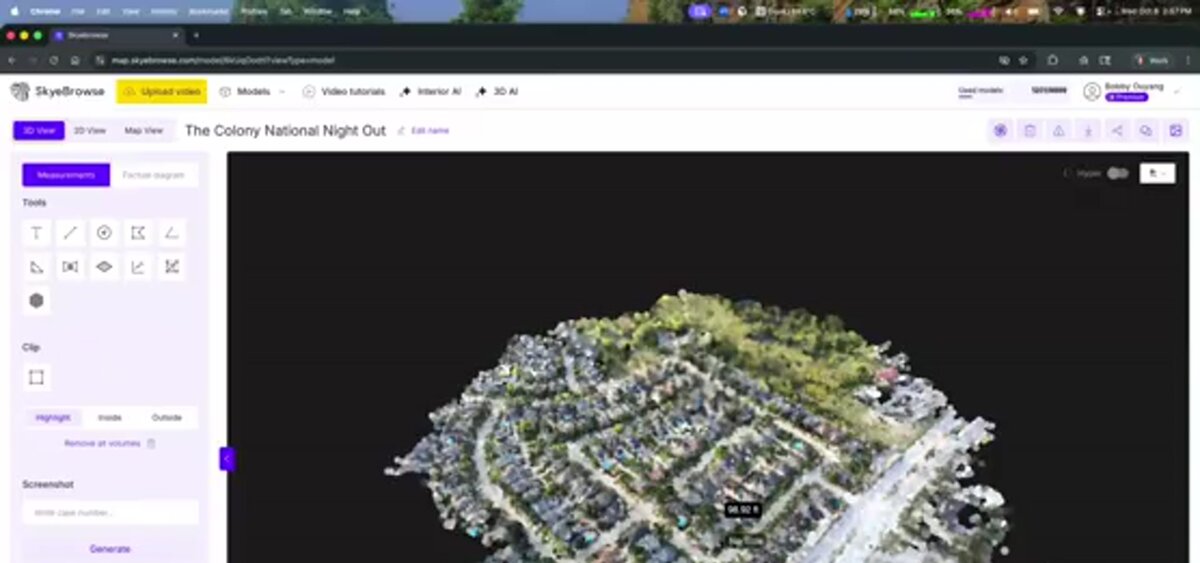
Campus drone mapping uses aerial video for exterior overviews and approach routes, while smartphone or 360-camera video covers interior spaces. Both types of footage upload to the same cloud platform and process into separate navigable models — one for the building footprint and surroundings, another for the internal layout.
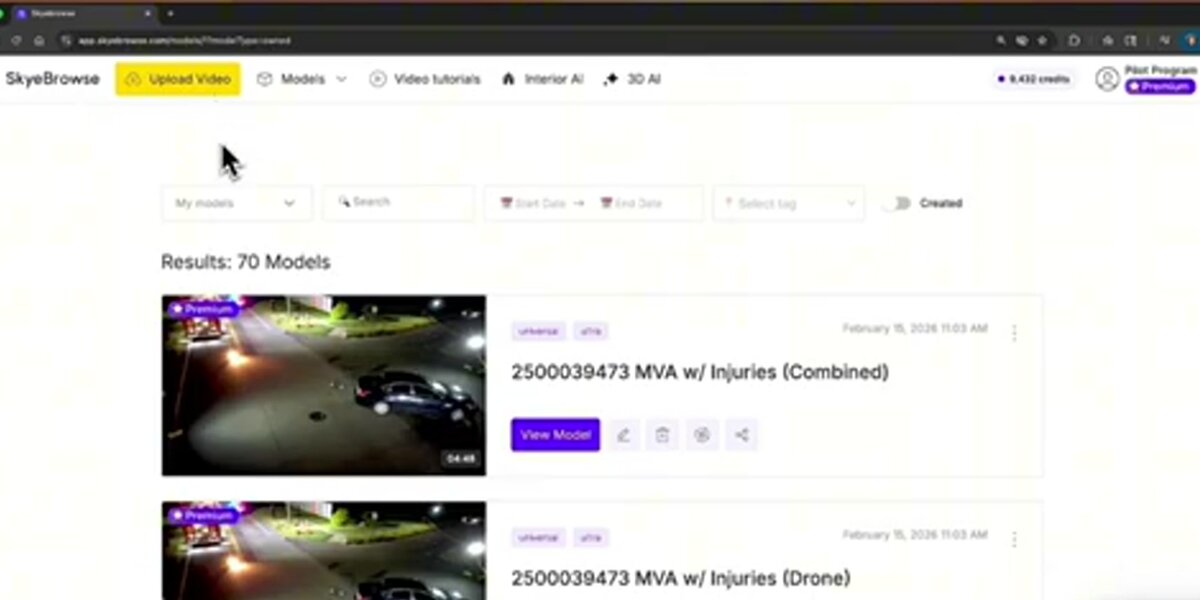
SkyeBrowse accepts .MP4 and .MOV video from any capture device and processes it through a cloud engine that constructs a spatial model without requiring desktop hardware or GIS expertise. For campus applications, that flexibility matters: a single security officer can fly a DJI drone around a dormitory block to create an exterior model, then walk the interior corridors with a smartphone to capture hallway geometry, stairwell configurations, and room access points.
The exterior drone pass captures building footprints, parking lot approach routes, loading dock access, and perimeter fence lines. Interior walkthrough footage preserves door swing directions, AED station placements, emergency phone positions, and the spatial relationships between rooms that paper plans can't convey. Officers reviewing the resulting model can measure the distance from a main entry to a target room, identify sightlines from corridors, and mark rally points for multi-team deployments.
For university systems managing multiple campuses, standardizing the capture protocol across all locations means mutual aid officers arrive with actionable building intelligence already loaded on their tablets.
What can security planners actually do with a completed facility model?
Completed facility models support evacuation route planning, lockdown procedure rehearsal, CPTED (Crime Prevention Through Environmental Design) analysis, and multi-agency tabletop exercises — all before a single real-world incident requires the information. The same model used for planning exports as a GLB mesh file that integrates with emergency management and tactical planning software.
Campus security directors use facility models in several concrete ways. Evacuation planners measure corridor widths and doorway clearances directly from the model to calculate occupant flow rates and identify bottleneck points — work that previously required a fire code consultant with measuring equipment. The Premium processing tier (8K resolution, 0.25 inch accuracy) produces measurements precise enough to verify egress compliance and support fire marshal reviews without a physical re-inspection.
Active threat response teams use models to rehearse building clearing procedures: identifying optimal entry points, practicing team movement through specific corridor configurations, and coordinating positioning before the building becomes a live scene. High-risk facilities — research laboratories, data centers, biomedical buildings — benefit from the Premium Advanced tier (16K, 0.1 inch accuracy), where security consultants can conduct CPTED (Crime Prevention Through Environmental Design) analyses using measurable spatial evidence rather than subjective site observations.
The GLB mesh export integrates with emergency management platforms, letting a city fire department, campus EMS, and campus police work from the same building model during joint tabletop exercises. The fire department operations workflow mirrors the campus preplanning approach, and many campus fire safety teams already use this method for pre-incident planning.
How does videogrammetry support Clery Act compliance and secure documentation?
Archived 3D facility models provide objective, timestamped evidence of security measures — blue light phone locations, camera coverage zones, emergency assembly areas — that support Clery Act compliance certifications and post-incident federal reviews. Premium tier storage guarantees 5-year data retention, aligning with federal record-keeping requirements.
The Clery Act requires institutions to document security policies and demonstrate emergency notification capabilities. When the Department of Education conducts a security review, or when a civil suit follows an incident, a 3D model captured on a specific date provides verifiable spatial evidence that a floor plan cannot — showing where cameras were positioned, where emergency phones stood, and which exits were accessible.
SkyeBrowse's government-grade cloud infrastructure (AWS GovCloud, FedRAMP Moderate Authorized on premium tiers) stores models with access logs recording who viewed each facility record and when. For legal discovery, those audit trails document that security planning was systematic. For compliance audits, the models demonstrate that security measures were physically present and documented.
Multi-agency sharing operates through permission-based access: campus police can grant a city emergency management office access to specific building models without sharing the complete facility library — a meaningful control when building layouts are sensitive operational information.
For campus master planning and new construction, current facility models let architects identify security vulnerabilities in existing structures and design around them. The disaster response mapping workflow shows how the same facility intelligence supports post-event investigation alongside pre-event planning.
What does the cost and time comparison look like versus traditional security surveys?
Traditional campus security surveys run $5,000 to $15,000 per comprehensive building assessment when conducted by outside consultants — pricing that makes full-campus coverage financially prohibitive for most institutions. In-house drone and smartphone capture paired with cloud processing drops the per-building cost below $40 while returning models the same day rather than weeks later.
The economics shift significantly when security staff conduct captures in-house. A three-hour, four-person manual documentation effort compresses to roughly 10 minutes of video capture by a single operator — producing a navigable 3D model rather than a static photo set at a fraction of the labor cost.
For universities managing 30 to 50 buildings, the traditional approach creates a financial barrier that leaves most structures undocumented. With in-house videogrammetry, a campus security team can build a complete facility library over a single academic semester and refresh individual buildings after renovations, rather than working from decade-old floor plans.
Across the accuracy tiers: Lite suits initial reconnaissance; Premium ($99 per model) delivers 0.25 inch accuracy for evacuation compliance work; Premium Advanced ($199 per model) suits high-risk facilities requiring sub-inch precision. A 30-building campus library at Lite tier runs under $1,500 — comparable to a single day of consultant time. The best CJIS compliant mapping platform article covers compliance infrastructure for departments with sworn officers and strict data handling requirements.
FAQ
What type of drone is best for campus security preplanning?
Most campus security programs use the same DJI drones already in their fleet — the Mini 4 Pro, Air 3, or Mavic 3 Classic all work well for exterior overviews. For interior building capture, smartphones and 360 cameras are better suited than drones. SkyeBrowse accepts video from any of these sources through the same upload workflow at app.skyebrowse.com. See SkyeBrowse's full supported drone list for compatibility details.
Does campus drone mapping require FAA authorization?
Flying drones on or near a campus generally requires a Part 107 remote pilot certificate and may require LAANC authorization depending on proximity to controlled airspace. Campus security departments should consult FAA DroneZone and local airspace charts before conducting aerial surveys. Interior captures with smartphones or 360 cameras do not require FAA authorization, which makes them the practical choice for most campus building documentation. The drone mapping guide covers airspace considerations in detail.
How does SkyeBrowse protect sensitive campus facility data?
SkyeBrowse operates on AWS GovCloud (US) infrastructure with FedRAMP Moderate Authorization on premium tiers. Facility models are stored behind controlled access with permission-based sharing, so campus police can grant specific building access to outside response partners without exposing the full facility library. Audit trails log every access event — a meaningful safeguard when building layouts constitute sensitive operational information.
How long does it take to build a campus facility model library?
Processing time scales roughly with video length — an 8-minute building walkthrough returns a usable model in about 8 minutes. A campus security team can document and process 4 to 6 buildings per day, meaning a 30-building campus can be fully covered across a standard workweek by a single operator. Departments that prioritize high-risk buildings first can have actionable intelligence for their most critical facilities within hours of starting the program.