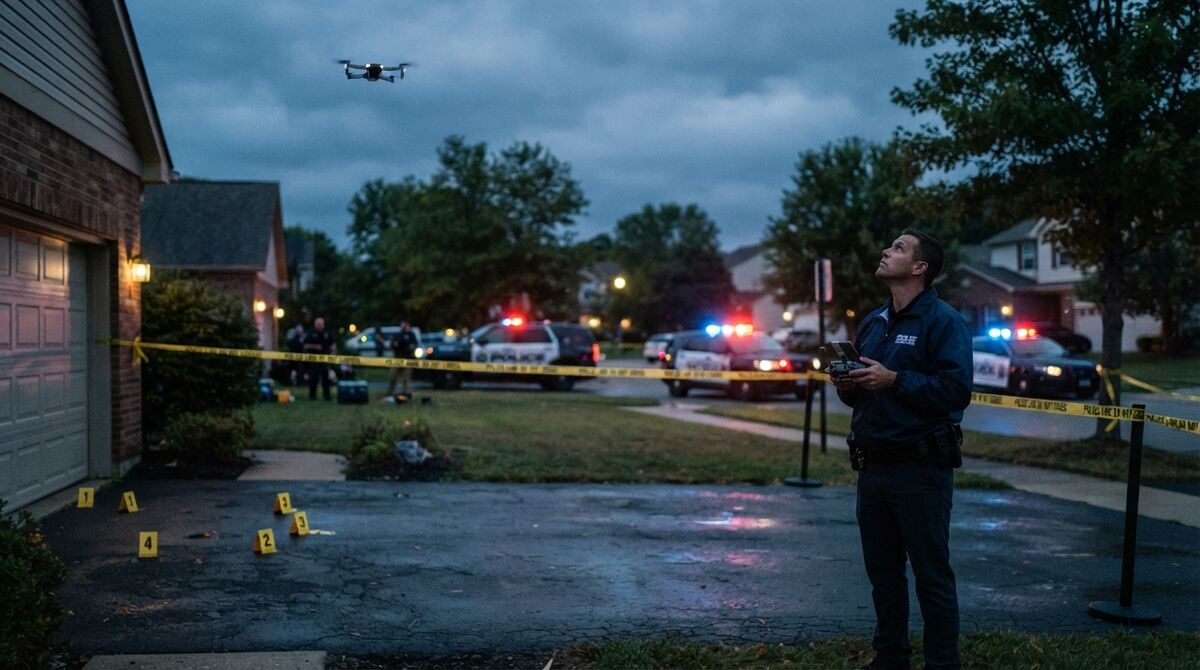
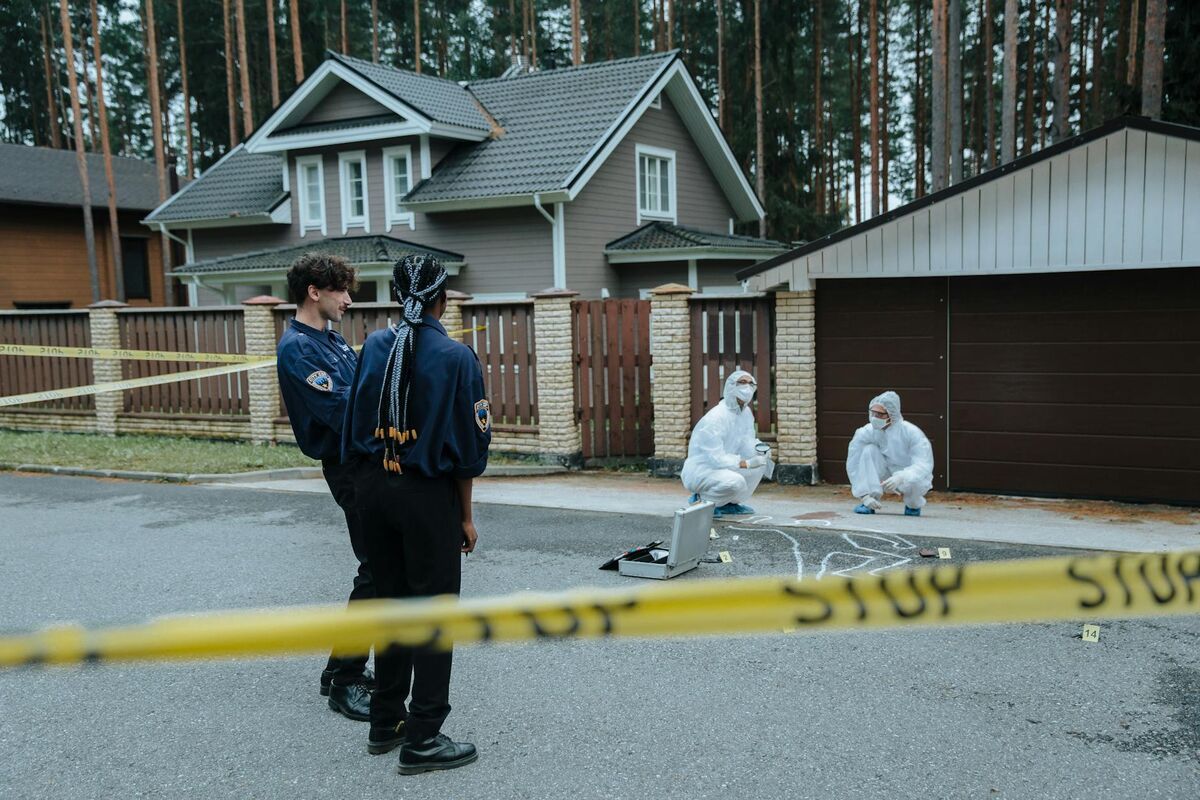
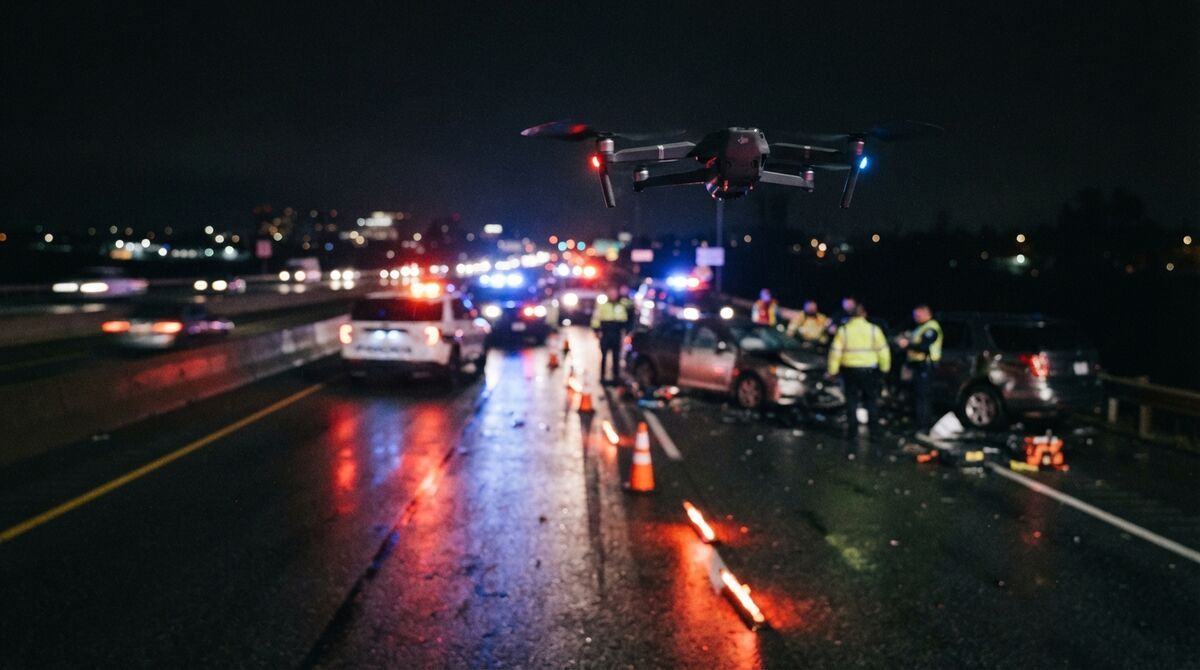
A crime scene sketch is a measured drawing that records where evidence, bodies, furniture and fixed landmarks sit in relation to each other. Investigators draw a rough sketch at the scene, then turn it into a finished crime scene diagram for reports and court. This guide covers what every sketch must include, the standard measurement methods, the main sketch views, and how to produce a scaled diagram from a drone or phone 3D model.
Key Takeaways
- A crime scene sketch fixes each evidence item's position with measurements from permanent reference points.
- The rough sketch is the unaltered field record; the final diagram is a clean, scaled version built from its measurements.
- Every sketch needs case identifiers, a north arrow, a scale or "not to scale" note, a legend and numbered evidence that matches the evidence log.
- Triangulation, rectangular coordinates, a transecting baseline and polar coordinates are the four standard ways to measure evidence locations.
- A 3D scene model lets you measure later and generate a north-up sketch and factual diagram PDF without re-entering the scene.
Contents
- What is a crime scene sketch?
- What is the difference between a rough sketch and a final sketch?
- What must a crime scene sketch include?
- How do you take measurements for a crime scene sketch?
- What are overhead, elevation and cross-projection sketches?
- Should you draw crime scene diagrams by hand, in CAD or from a 3D model?
- Are crime scene sketches admissible in court?
- How do you make a crime scene diagram from a drone or phone 3D model?
- FAQ
What is a crime scene sketch?
A crime scene sketch is a drawing that shows a scene's layout and the measured location of each piece of evidence. It complements photographs and notes by recording distances a camera lens distorts. Investigators, attorneys and juries rely on it to understand what was found and where.
The sketch is the part of scene documentation that pins items to measured positions, so someone can reconstruct the layout months later.
The National Institute of Justice's Crime Scene Investigation: A Guide for Law Enforcement tells investigators to sketch the immediate area with case identifiers and north, locate evidence before it's moved, correlate it with evidence records, and measure distances to nearby buildings or landmarks.
What is the difference between a rough sketch and a final sketch?
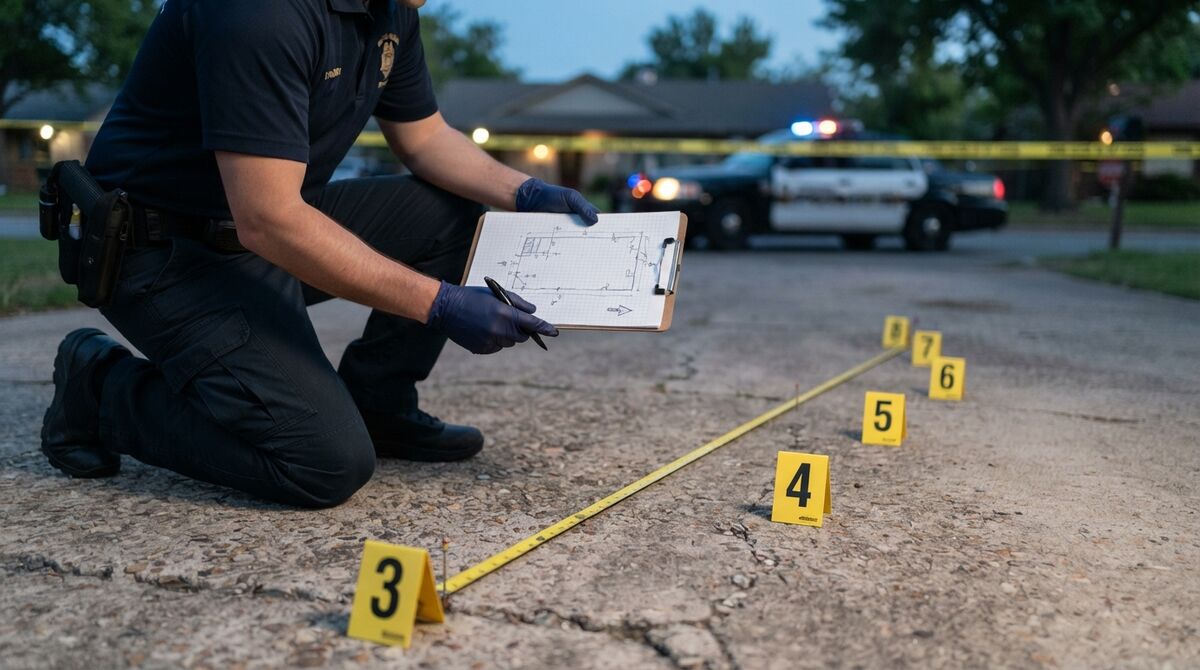
The rough sketch is drawn by hand at the scene, roughly proportional, with every measurement written on it. A final sketch, or crime scene diagram, is redrawn later to scale, usually in software. Investigators keep the rough in the case file unaltered as the original record.
Rough sketch. Drawn on graph paper while the scene is intact. Accuracy comes from the numbers, so the drawing can be loose. Mark it "not to scale," sign and date it, and never redraw it; line through mistakes and initial them. A missing or rewritten rough sketch invites hard questions on cross-examination.
Final sketch. Drawn later to a stated scale from the rough sketch's measurements, cleaned of clutter and labeled for readers who weren't there.
What must a crime scene sketch include?
A complete crime scene sketch has a title block with case number, date, time, location and sketcher. It also needs a north arrow, a scale or "not to scale" note, a legend, fixed reference points, numbered evidence matching the evidence log, and measurements locating each item.
Use this checklist before you leave the scene:
- Title block: case number, address, date, time and sketcher
- Orientation: a north arrow and labeled streets, doors or rooms
- Scale: "not to scale" on the rough; a stated scale or graphic scale bar on the final
- Legend or key: what each symbol and number means
- Fixed reference points: walls, door frames, poles or curb corners
- Evidence: each item numbered to match its placard and the evidence log
- Measurements: written on the sketch or in a linked measurement table
How do you take measurements for a crime scene sketch?
Crime scene sketch measurements use four standard methods: rectangular coordinates, triangulation, a transecting baseline and polar coordinates. Each locates an item from fixed reference points that will still exist when someone checks the work. Pick the method that fits the scene's shape.
Rectangular coordinates. Measure from the item to two fixed lines at right angles, such as two walls. It's fastest indoors in square rooms.
Triangulation. This method locates a point from two known points: measure from each fixed point to the item, and the two distances form a triangle that puts it in one spot. It suits irregular rooms and outdoor scenes with solid landmarks.
Transecting baseline. Run a tape straight through the scene between two fixed points, then record each item's distance along the tape and its perpendicular distance from it. It suits large outdoor scenes and long hallways.
Polar coordinates. Record the compass angle and distance to each item from one fixed point. It's quick in open areas and needs a compass or transit.
Measure to a consistent spot on each item, such as the center of a casing, and note it.
What are overhead, elevation and cross-projection sketches?
An overhead sketch, also called a bird's-eye or floor-plan view, shows the scene from directly above and is the most common type. An elevation sketch shows a vertical surface from the side, so heights are visible. A cross-projection sketch folds walls down flat around the floor plan, showing items on walls and floor in one drawing.
Overhead views cover most cases. Add an elevation when height matters, such as a bullet hole's distance above the floor or a bloodstain on a wall. Cross-projection, also called an exploded view, suits rooms with evidence on several walls.
Should you draw crime scene diagrams by hand, in CAD or from a 3D model?
Hand sketches suit the rough field record and small scenes. CAD and diagramming software produce clean, scaled finals that are only as accurate as the field measurements behind them. A 3D model keeps every surface measurable after the scene is released.
The weak point of tape-and-paper work is the measurement you forgot, because a released scene can't be re-measured. Videogrammetry, building a 3D model from continuous video frames, records the whole space at once so investigators can measure between any two points later. Scene models on Public Safety & Enterprise are accurate to 0.1 inch, processed at 16K. In an independent AirBorne Works study using a Leica BLK360 laser scan as ground truth, SkyeBrowse video models came closest to the scan on 8 of 9 measured lines, ahead of photo-based Pix4D Mapper and Leica BLK3D, showing laser-scanner-level accuracy.
To compare platforms, see our guide to crime scene 3D mapping software and the roundup of the best 3D mapping software for police.
Are crime scene sketches admissible in court?
Crime scene sketches and diagrams are routinely used in court when a witness, usually the investigator who made them, testifies they fairly and accurately represent the scene. Admissibility depends on the jurisdiction's rules of evidence. Keep the rough sketch, notes and measurement data so the final can be traced back to them.
In federal courts, Rule 901 of the Federal Rules of Evidence requires evidence sufficient to show an item is what its proponent claims. Rule 107, added in 2024, governs illustrative aids that help jurors understand evidence and says an aid isn't itself evidence. State rules differ, so confirm requirements with your prosecutor's office.
NIST's Organization of Scientific Area Committees for Forensic Science maintains a registry of forensic standards agencies use for documentation policies. A diagram from a 3D model holds up best with documented chain of custody for the source video and model; see CJIS-compliant drone mapping.
How do you make a crime scene diagram from a drone or phone 3D model?
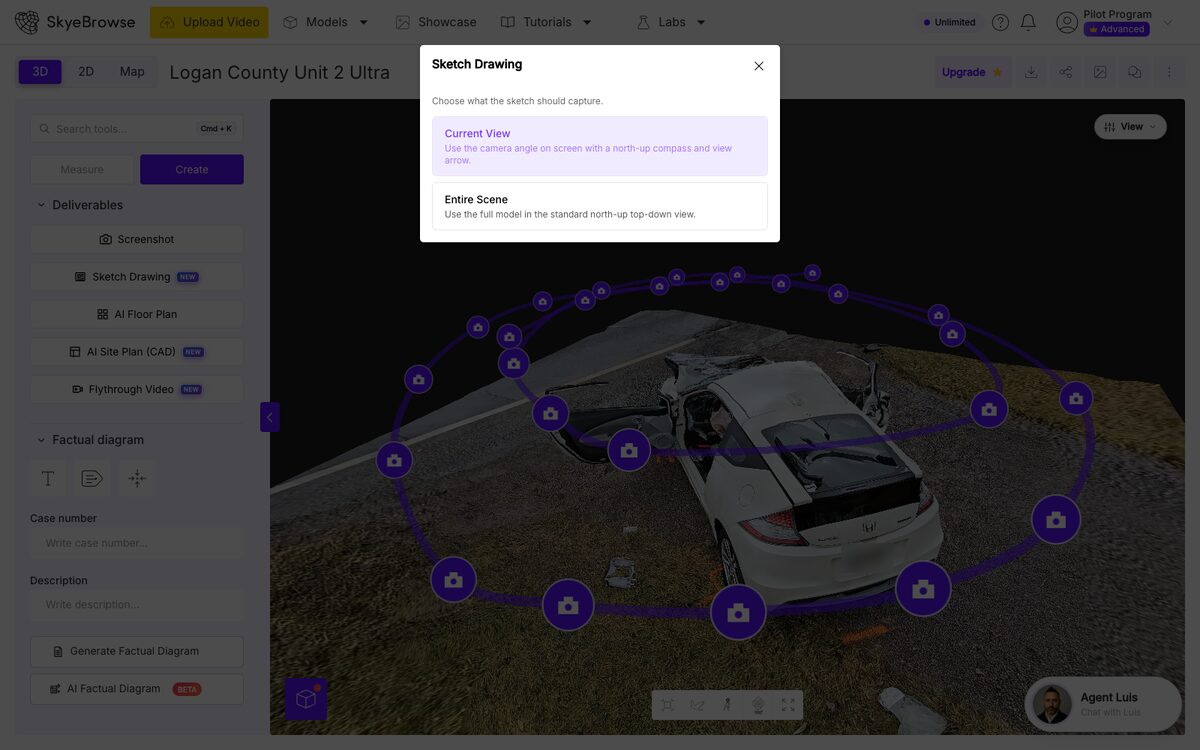
Record drone or phone video of the scene, upload it to SkyeBrowse and open the model. Add measurements, annotations and a reference point, then use Sketch Drawing for a north-up sketch and Factual Diagram for a PDF. These tools are part of Public Safety & Enterprise.
1. Capture. Fly an orbit over an outdoor scene or walk a phone slowly through a room, recording MP4 or MOV video. Phone video has no GPS, so scale the model with the Scale Tool and one tape-measured distance. Our drone crime scene mapping guide covers flight patterns; the same workflow supports accident reconstruction with drone mapping.
2. Measure and mark. In the viewer, place distance measurements between evidence and fixed points, drop annotations for each evidence number, and attach close-up photos through Case Gallery. Public Safety Icons add standard NAPSG law enforcement and EMS symbols.
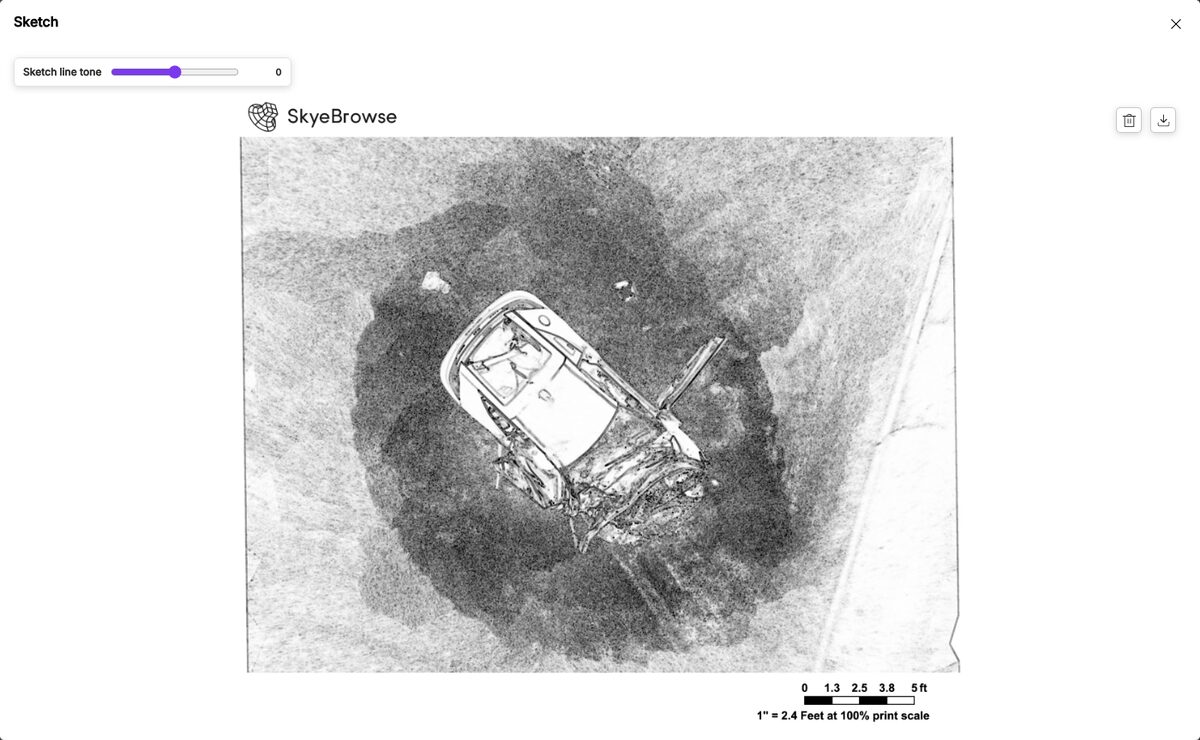
3. Generate the sketch. Under Create, Sketch Drawing offers two scopes. Current View captures the on-screen camera angle with a north-up compass and a view-direction arrow. Entire Scene produces the standard north-up, top-down view of the whole model. The sketch can carry annotation callouts, a scale bar when the model is georeferenced or manually scaled, and a compass when it's georeferenced.
4. Build the factual diagram. Factual Diagram assembles a PDF with a top-down overview, the sketch page, annotation callouts, measurement pages and an optional case number and description. AI Factual Diagram drafts a neutral factual description from your scene notes, measurements and model data. It's for factual descriptions only and doesn't determine fault, cause, speed or reconstruction conclusions.
Sketch Drawing, Factual Diagrams, Case Gallery, Icons, CJIS compliance and 5-year storage come with Public Safety & Enterprise at $199 per model per year. Commercial and Pro models don't include them. See the pricing page.
FAQ
Why is it necessary to sketch a crime scene if you already have photos?
Photos distort distance and can't show the whole layout at once. A sketch records exact measurements between evidence and fixed points, filters out clutter and gives everyone one view of how items relate.
Does a crime scene sketch have to be drawn to scale?
The rough sketch made at the scene usually isn't to scale and should say so, though it carries every measurement. The final diagram is drawn to scale from those measurements and states the scale or shows a scale bar.
Which SkyeBrowse plan includes Sketch Drawing and Factual Diagrams?
Sketch Drawing, Factual Diagrams and AI Factual Diagram are part of Public Safety & Enterprise, priced at $199 per model per year. Commercial and Pro models don't include them. Agencies can request the Pilot Program for about two weeks of free Public Safety & Enterprise access.
Want to test Sketch Drawing and Factual Diagrams on your agency's own scenes? Request a quote or ask about the Pilot Program.