# Part 107: Drone Pilot Certification & Test Guide
> Part 107 guide: who needs a drone license, the $175 FAA test (60 questions, 70% to pass), the 7-step application, free online renewal, waivers and Remote ID.
Source: https://www.skyebrowse.com/news/posts/part-107-drone-certification
Published: 2026-03-23
Part 107 is the FAA's Small Unmanned Aircraft Systems rule (14 CFR Part 107), and it requires anyone flying a drone under 55 pounds for business or compensation to hold a Remote Pilot Certificate. Getting the certificate means passing a $175, 60-question knowledge test with a score of 70% or higher, applying through IACRA, and clearing a TSA background check. You keep it current with free online training every 24 calendar months.
Part 107 took effect in August 2016 and replaced the case-by-case exemptions that used to govern commercial drone work. If you fly for a client, a paycheck, or your own business, including mapping, roof inspection, real estate media, or public safety documentation, Part 107 is the rule you operate under. This guide covers who needs the certificate, what it costs, the exact FAA application steps, the test format, renewal, waivers, and what to do with the license once you have it. Every rule below was checked against FAA.gov on October 14, 2026.
## Key Takeaways
- Any drone flight under 55 pounds done for business or compensation needs a Part 107 Remote Pilot Certificate, including sub-250-gram drones.
- The initial test costs about $175, has 60 questions and a 2-hour limit, and takes 70% to pass. The application, TSA check, and renewal training cost nothing.
- The FAA process has seven steps: FTN, test booking, the UAG test, Form 8710-13 in IACRA, the TSA check, the temporary certificate, then the plastic card by mail.
- Renewal is a free online course (ALC-677) every 24 calendar months. The in-person recurrent test ended in April 2021.
- Night flights and many operations over people no longer need a waiver. BVLOS and flights above 400 feet still do.
## Contents
- [What is FAA Part 107 and who needs it?](#what-is-faa-part-107-and-who-needs-it)
- [How much does Part 107 certification cost?](#how-much-does-part-107-certification-cost)
- [How do you apply for the Part 107 remote pilot certificate?](#how-do-you-apply-for-the-part-107-remote-pilot-certificate)
- [What does the Part 107 knowledge test cover?](#what-does-the-part-107-knowledge-test-cover)
- [How do you prepare for and pass the Part 107 exam?](#how-do-you-prepare-for-and-pass-the-part-107-exam)
- [How do you renew a Part 107 certificate?](#how-do-you-renew-a-part-107-certificate)
- [What are Part 107 waivers and when do you need one?](#what-are-part-107-waivers-and-when-do-you-need-one)
- [How does Part 107 certification connect to commercial mapping work?](#how-does-part-107-certification-connect-to-commercial-mapping-work)
- [FAQ](#faq)
## What is FAA Part 107 and who needs it?
Part 107 covers any small drone under 55 pounds flown for business, compensation, or work purposes in U.S. airspace. The person at the controls must hold a Remote Pilot Certificate before the flight. Weight below 250 grams does not exempt commercial work.
The FAA's eligibility rules for a first-time remote pilot are short. You must be at least 16 years old, able to read, speak, write, and understand English, physically and mentally fit to fly safely, and you must pass the initial aeronautical knowledge test, officially called "Unmanned Aircraft General - Small (UAG)" ([FAA: Become a Certificated Remote Pilot](https://www.faa.gov/uas/commercial_operators/become_a_drone_pilot)). You can sit the test at 14, but the certificate is issued at 16.
The "commercial" line is broader than many new pilots expect. Shooting listing photos for a realtor, inspecting a roof for a contractor, mapping a jobsite for a builder, or collecting footage for your own paid product all count. A pilot employed by a city or county usually flies under Part 107 too, unless the agency operates as a public aircraft operator under its own Certificate of Waiver or Authorization (COA).
The standard Part 107 operating limits are what most mapping and inspection jobs need: a maximum altitude of 400 feet above ground level (higher only within a 400-foot radius of a structure and no more than 400 feet above its top), visual line of sight, a top groundspeed of 87 knots (100 mph), no flight over people outside the FAA's four operations-over-people categories, and airspace authorization (usually through LAANC) before entering controlled airspace. You also need to keep your certificate and photo ID on you whenever you fly.
## How much does Part 107 certification cost?
The only required fee is the initial knowledge test, which the FAA says Knowledge Testing Centers charge at approximately $175. The IACRA application, TSA background check, temporary and permanent certificates, and the recurrent training course are free. Prep courses and practice exams are optional extras.
The $175 figure comes straight from the [FAA's cost FAQ](https://www.faa.gov/faq/how-much-does-it-cost-get-remote-pilot-certificate). If you fail, you pay the fee again to retest. Most pilots add a prep course, which typically runs from free (the FAA study guide and FAA sample questions) to a few hundred dollars for a structured video course with practice exams. Pilots who already hold a Part 61 pilot certificate with a current flight review skip the test entirely and take the free online ALC-451 course instead.
| Item | Cost | Who pays it |
|---|---|---|
| UAG initial knowledge test | About $175 | First-time remote pilots |
| IACRA application and TSA check | Free | Everyone |
| ALC-451 initial course (Part 61 pilots) | Free | Current Part 61 certificate holders |
| ALC-677 or ALC-515 recurrent training | Free | Every remote pilot, every 24 calendar months |
| Drone registration (FAA DroneZone) | $5 per drone, valid 3 years | Owners of drones flown under Part 107 |
| Third-party prep course | $0 to a few hundred dollars | Optional |
## How do you apply for the Part 107 remote pilot certificate?
First-time pilots follow seven FAA steps: create an IACRA profile to get an FAA Tracking Number, book the test at an approved Knowledge Testing Center, pass the UAG test, complete Form 8710-13 in IACRA using your 17-digit Knowledge Test Exam ID, clear the TSA background check, print the temporary certificate, and wait for the permanent card by mail.
Order matters here, and older guides often get it wrong: you take the test before you file the IACRA application, because the application needs your exam ID. The sequence below follows the FAA's current instructions.
**Step 1: Get your FAA Tracking Number (FTN).** Create a profile in the [Integrated Airman Certification and Rating Application (IACRA)](https://iacra.faa.gov) before you register for a test. IACRA assigns your FTN, which links your test result to your application.
**Step 2: Book the knowledge test.** Schedule an appointment with an FAA-approved Knowledge Testing Center. The FAA runs scheduling through PSI under its Airman Certificate Testing Service (ACTS). Bring a government-issued photo ID.
**Step 3: Pass the UAG test.** You need 70% or higher. You'll receive your Airman Knowledge Test Report with a 17-digit exam ID when you finish.
**Step 4: Complete FAA Form 8710-13 in IACRA.** Log in, choose "Start New Application," select Application Type "Pilot" and Certification "Remote Pilot," and enter the 17-digit Knowledge Test Exam ID when prompted. The FAA warns it can take up to 48 hours from the test date for your result to appear in IACRA. Sign electronically and submit.
**Step 5: Clear the TSA security background check.** The FAA sends a confirmation email when the check is complete.
**Step 6: Print your temporary certificate.** That same email explains how to print the temporary remote pilot certificate from IACRA. You may fly commercially once you have it.
**Step 7: Receive the permanent card.** The plastic certificate arrives by mail after the FAA finishes internal processing.
Pilots who already hold a Part 61 certificate and a flight review in the previous 24 months take a different path: complete the free ALC-451 course on FAASafety.gov, file Form 8710-13 in IACRA, then validate identity with a FSDO, a designated pilot examiner, an airman certification representative, or a CFI. The [FAA's step-by-step page](https://www.faa.gov/uas/commercial_operators/become_a_drone_pilot) lists both paths.

## What does the Part 107 knowledge test cover?
The UAG test has 60 multiple-choice questions, a 2-hour time limit, and a 70% passing score, so you need 42 correct answers. Questions cover regulations, airspace and sectional charts, weather, loading and performance, and operations such as emergency procedures, crew resource management, radio communication, night operations, and preflight inspection.
Those numbers come from the [FAA Airman Knowledge Testing Matrix](https://www.faa.gov/training_testing/testing/testing_matrix) (revised September 25, 2026), which lists the UAG test at 60 questions, 2.0 hours, a minimum test age of 14, and a 70% passing score. The FAA's own topic list for the test includes:
- Regulations covering remote pilot privileges, limitations, and flight operations
- Airspace classification, operating requirements, and flight restrictions
- Aviation weather sources and how weather affects small drone performance
- Loading and performance, including center of gravity and battery effects
- Emergency procedures and crew resource management
- Radio communication procedures and airport operations
- Physiological effects of drugs and alcohol
- Aeronautical decision-making and judgment
- Maintenance and preflight inspection procedures
- Operation at night
Chart questions use the Airman Knowledge Testing Supplement (FAA-CT-8080-2H), which you get at the testing center. You'll be asked to identify airspace classes around an airport, read obstacle heights, and decode symbols on a sectional chart. Weather questions lean on METARs and TAFs. Expect a handful of night-operations and operations-over-people questions too, since those rules were added to the test in 2021.
## How do you prepare for and pass the Part 107 exam?
Most pilots pass on the first try by working through the FAA's free Remote Pilot study guide, drilling the FAA sample questions, practicing on real sectional charts, and taking several timed practice exams. Book your test date early so you have a deadline, because testing centers in busy metros can be booked weeks out.
Start with the free FAA Remote Pilot study guide and the [FAA's UAG sample questions](https://www.faa.gov/sites/faa.gov/files/training_testing/testing/test_questions/uag_questions.pdf). They come from the same source material as the real test, so they reveal how the FAA phrases airspace and weather questions. Pilots who memorize a question bank without understanding charts tend to stumble on new chart excerpts.
For chart practice, open [SkyVector](https://skyvector.com), find an airport near you, and work out the airspace class, ceiling, and floor at a few points around it. Ten minutes a day of this builds the speed you need for the 2-hour limit. If you want a structured course, providers such as [Pilot Institute](https://pilotinstitute.com/part-107-time/) estimate that the full process, from booking the test to receiving a temporary certificate, takes roughly 21 to 33 days, so plan your first paid job accordingly.
On test day, use the provided scratch paper to sketch airspace layers before you answer chart questions, and flag any question you're unsure about so you can come back to it. You'll see your score right away.
## How do you renew a Part 107 certificate?
A Part 107 certificate never expires, but you may only fly under it if you've completed FAA recurrent training within the previous 24 calendar months. The training is a free online course on FAASafety.gov: ALC-677 for any remote pilot, or ALC-515 for remote pilots who also hold a current Part 61 flight review. There is no in-person recurrent test anymore.
The FAA's 2021 operations-over-people rule replaced the old in-person recurrent knowledge test with free online recurrent training, effective April 2021 ([FAA: Operations Over People](https://www.faa.gov/uas/commercial_operators/operations_over_people)). Many older guides, and plenty of forum posts, still tell pilots to rebook a $175 test every two years. That is out of date.
To renew, log in to FAASafety.gov, complete ALC-677, and keep the completion certificate with your remote pilot certificate. "24 calendar months" means the deadline lands at the end of the month, so a course finished on March 3, 2026 keeps you current through March 31, 2028. If your training lapses, your certificate stays valid, but you cannot fly under Part 107 until you complete the course again.
## What are Part 107 waivers and when do you need one?
A Part 107 waiver lets a certified pilot fly outside specific standard rules, most often beyond visual line of sight (BVLOS), above 400 feet, or with multiple drones per pilot. Night flights and many operations over people and moving vehicles no longer need a waiver after the 2021 rule change. Waivers are requested through FAADroneZone with a safety case.
Since April 21, 2021, routine night operations are allowed if the pilot has completed the updated test or recurrent training and the drone shows lit anti-collision lighting visible for at least 3 statute miles. Operations over people are allowed under four categories based on the aircraft's weight and risk, and operations over moving vehicles are allowed within a closed or restricted-access site or without sustained flight over the vehicles ([FAA: Operations Over People](https://www.faa.gov/uas/commercial_operators/operations_over_people)).
Waivers remain the route for BVLOS corridor work such as pipelines and power lines, flights above the 400-foot limit, and other deviations. The FAA reviews each application against a safety case and may require visual observers, detect-and-avoid equipment, or other mitigations. Details live on the [FAA Part 107 waivers page](https://www.faa.gov/uas/commercial_operators/part_107_waivers).
Controlled airspace is handled separately. Most airspace requests near airports are approved in seconds through LAANC partner apps, up to the altitudes on the FAA's UAS Facility Maps. Remote ID is also separate: every drone that must be registered has to broadcast Remote ID, either built in (Standard Remote ID), through an add-on broadcast module, or by flying inside an FAA-Recognized Identification Area ([FAA: Remote ID](https://www.faa.gov/uas/getting_started/remote_id)).
## How does Part 107 certification connect to commercial mapping work?
The certificate makes you legal to fly for pay. What clients pay for is the deliverable, such as a measurable 3D model, an orthomosaic, or a point cloud. Certified pilots in mapping, inspection, construction, and public safety pair their license with processing software that turns flight footage into those outputs.
Once you hold the certificate, the next decision is the processing platform. Pilots doing [drone mapping](/news/posts/drone-mapping-guide), [drone surveying](/news/posts/drone-surveying-guide), or [drone inspection services](/news/posts/drone-inspection-services) win repeat work on the quality and speed of what they deliver. If you're comparing options, our guide to [free drone mapping software](/news/posts/free-drone-mapping-software) covers the no-cost tools first.
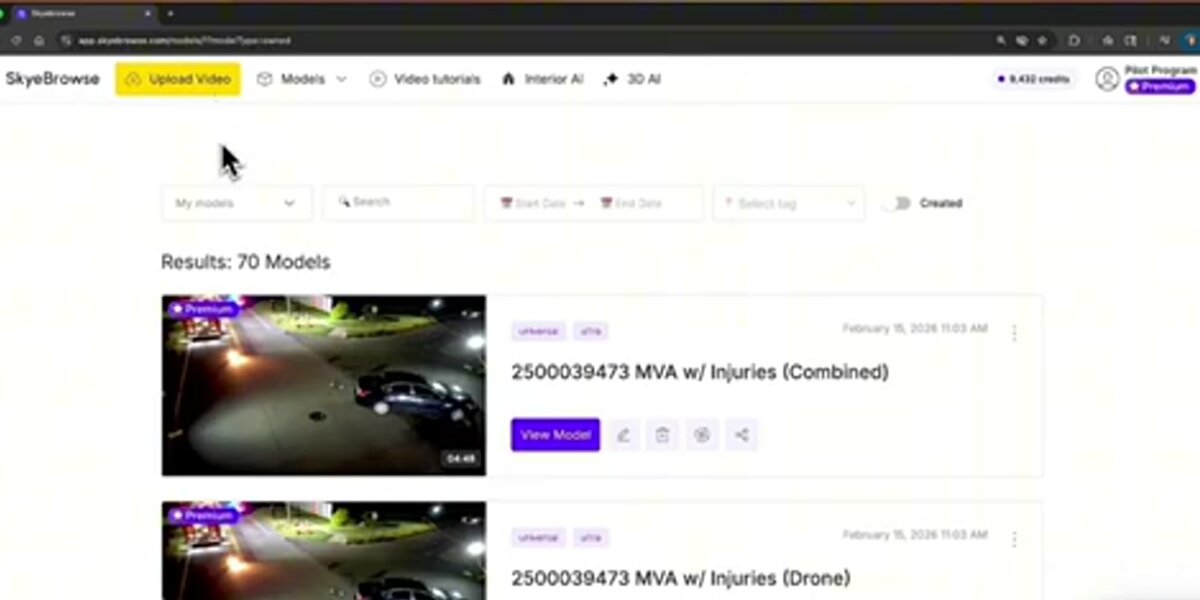
SkyeBrowse takes a video-first approach: you fly a normal video orbit or grid, upload the .MP4 or .MOV to app.skyebrowse.com, and the cloud returns a georeferenced 3D model and orthomosaic in minutes, with no GPU workstation or ground control points required. Supported DJI drones can fly automated captures with the SkyeBrowse Flight App, and Universal Upload handles video from any other drone, phone, or 360 camera.
Pricing is per model, so it scales with your jobs. A Commercial model is $24.99 with 8K processing at 0.5 inch accuracy and 3-month storage, a Pro model is $49.99 with 1-year storage, exports, and AI tools, and Public Safety & Enterprise is $199 per model with 16K Ultra processing at 0.1 inch accuracy, AI Moving Object Removal, and full CJIS compliance. When you quote a client, factor in pilot time plus the per-model processing cost; our [drone services pricing](/news/posts/drone-services-pricing) guide covers market rates.
## FAQ
**How much does it cost to get a Part 107 license?**
The FAA says Knowledge Testing Centers charge approximately $175 for the initial aeronautical knowledge test. The IACRA application, the TSA background check, the certificate itself, and the online recurrent training are free. Optional prep courses from third parties cost extra.
**How hard is the Part 107 test?**
The Unmanned Aircraft General - Small (UAG) test has 60 multiple-choice questions, a 2-hour time limit, and a 70% passing score, so you need at least 42 correct answers. Most candidates find sectional chart reading, airspace classes, and weather reports the hardest topics.
**How do you renew a Part 107 certificate?**
The certificate itself does not expire, but you must complete the FAA's free online recurrent training (ALC-677, or ALC-515 for current Part 61 pilots) within the previous 24 calendar months to keep flying under Part 107. Since April 2021, there is no in-person recurrent test.
**How long does it take to get a Part 107 license?**
Plan on about three to five weeks from booking the test to holding a temporary certificate. The FAA notes it can take up to 48 hours for a test result to appear in IACRA, and the temporary certificate is released by email after the TSA security check clears.
**Can I fly at night with a Part 107 certificate?**
Yes. Since April 21, 2021, routine night operations are allowed without a waiver if the remote pilot has completed the updated initial test or online recurrent training and the drone has lit anti-collision lighting visible for at least 3 statute miles. Airspace authorization rules still apply in controlled airspace.
**Do I need Part 107 to fly a drone under 250 grams for business?**
Yes. The 0.55-pound (250-gram) threshold affects registration and the operations-over-people categories, but any drone flown for business or compensation under 55 pounds falls under Part 107, so the pilot still needs a remote pilot certificate.
**Do I need Part 107 to fly for a government agency or fire department?**
Usually. Agency pilots either fly under Part 107 with their own remote pilot certificates or under a public aircraft COA that the agency holds with the FAA. Most departments require Part 107 for every UAS operator even when a COA is in place.
**Upload your first video free.** Create a free SkyeBrowse account, upload a drone video, and get a 3D model processed in the cloud. Freemium organizations that have never had a paid plan can get their first full Commercial model for $5 (normally $24.99), with every Pro tool, every export, and 90-day storage.